


.webp)
.jpg)
.webp)



 By
By
Table of Contents
- ▶ Why the Waterfall Position Often Fails (and How to Fix It)
- ▶ At a Glance: The Waterfall Basics
- ▶ Understanding the Waterfall Mechanics
- ▶ Step-by-Step Guide to Perfect Execution
- ▶ Common Pitfalls to Avoid
- ▶ Pro Tips for Enhanced Sensation
- ▶ Safety First: Protecting Your Neck and Back
- ▶ Is This Right for Your Experience Level?
- ▶ Ideal For: Couples Seeking New Angles
- ▶ Creative Variations for More Comfort
- ▶ The Science of Alignment
- ▶ Frequently Asked Questions
Quick Answer
The waterfall sex position is an angled position where one partner rests near the edge of a bed or sofa with the upper body slightly lower than the hips, while the other partner remains more upright. The raised pelvis changes the angle compared with standard missionary-style positions. Good neck and back support are important for keeping the position comfortable and controlled.
Why the Waterfall Position Often Fails (and How to Fix It)
The waterfall sex position looks incredible in movies and artistic photography, but in real life, many couples find it frustratingly clumsy. The most frequent reason for this isn't a lack of chemistry; it is a fundamental misunderstanding of the physics involved.
Most people treat this position like a standard variation of missionary, but the inverted angle changes everything. Without proper preparation, you deal with gravity pulling you the wrong way, neck strain, and a sense of instability. The secret to making it work lies in the transition and the "infrastructure" you build on your bed before things get heated.
If you want to explore how different setups impact your intimacy, our comprehensive sex positions guide offers a deep dive into the mechanics of pleasure.
Best for: Couples looking to experiment with G-spot or P-spot angles, and those who enjoy a mix of intensity and vulnerability.
Avoid if: You have chronic lower back pain or vertigo issues when lying with your head below your heart.
The "Waterfall" isn't just about leaning back; it's about pelvic elevation. Getting the hips higher than the shoulders is what creates the unique internal sensation.
At a Glance: The Waterfall Basics
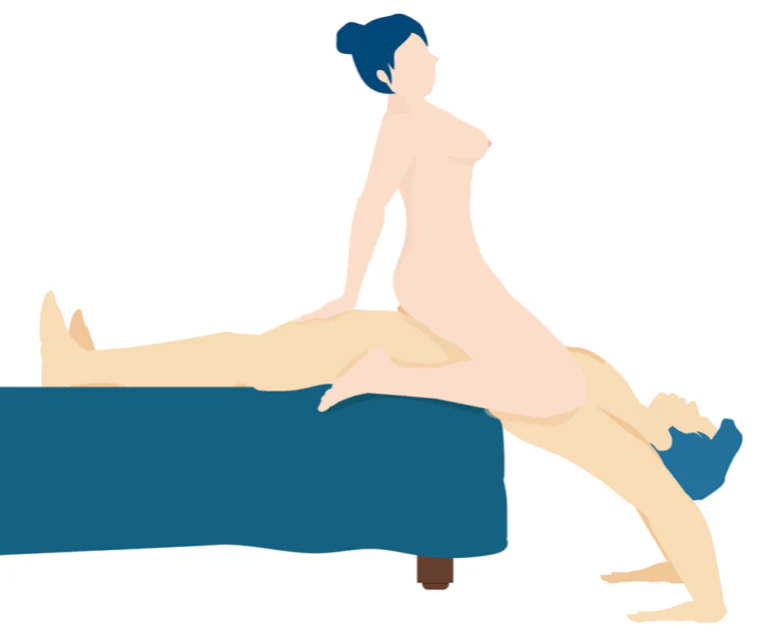
In the simplest terms, the waterfall involves one partner lying on the edge of a bed or sofa, allowing their upper body to drape downward. The other partner stands or kneels on the floor or the edge of the furniture.
While it seems straightforward, the key to success is controlled elevation. You don't need to be a gymnast; you just need to understand where your weight is distributed.
Understanding the Waterfall Mechanics
What sets the waterfall apart from other positions is the posterior pelvic tilt. By leaning back and down, the receiving partner's pelvis is naturally angled in a way that allows for a different path of entry.
This variation often hits areas that are missed during flat-lying positions. If you find that this "deeper" sensation is what you crave, you might also find the anvil position particularly rewarding. However, if stability is your primary concern, the T bone position provides a similar angle with much more physical support.
A LITTLE HALLOWEEN TREAT FOR OUR READERS
Explore More, Save More This Halloween!
Great intimacy starts with comfort, communication, and discovering what works for you. If you're curious about exploring new experiences together, we've got a little Halloween surprise just for our blog readers!
Enjoy an exclusive 20% OFF with no minimum spend using code BG20.

And there's more to enjoy! Receive a free gift on eligible orders $99+ and get free shipping on orders $59+.
Offer valid October 15-31, 2026. Free gifts apply to selected eligible products and are automatically added when eligible. While supplies last.
Step-by-Step Guide to Perfect Execution
1. Secure the Base
Don't just slide to the edge. Place a firm pillow or a dedicated positioning wedge under your mid-back. This ensures that as you lean back, your spine isn't doing all the work. Your shoulders should feel cradled, not dangling.
2. The Slow Transition
The "giving" partner should take the lead on the physical connection while the "receiving" partner focuses on their balance. Start with legs wrapped around the partner's waist or resting on their shoulders to lock the position in place.
3. Micro-Adjustments
Small movements in the hips—literally an inch up or down—can completely change how the waterfall feels. Communicate constantly. If it feels "too much," scoot back toward the center of the bed to reduce the angle of the incline.
Common Pitfalls to Avoid
- Over-Extending the Neck: Letting your head hang freely can lead to muscle strain or a "head rush." Use a pillow.
- Ignoring Surface Friction: If the bed is too slippery, the receiving partner will slowly slide off. Use your legs to anchor yourself.
- Rushing the Rhythm: Because the angle is steep, fast movements can cause the "giving" partner to lose contact or create uncomfortable bumping. Keep it steady.
Pro Tips for Enhanced Sensation
To take the waterfall from "okay" to "unforgettable," focus on the environment. Since one partner is often on the floor or at the very edge, ensure there is a soft rug or extra padding for their knees.
Using a specialized wedge pillow is arguably the best investment for this position. It mimics the "waterfall" effect without requiring you to actually hang off a bed. This adds a level of safety and allows you to focus entirely on the sensation rather than trying not to fall.
Expert Tip: Try this in front of a mirror. The visual of the "waterfall" drape adds a powerful psychological element to the physical experience.
.webp)
.jpg)
Safety First: Protecting Your Neck and Back
Safety in the waterfall position is primarily about blood pressure and spinal alignment. Because your head is lower than your heart, some people may experience dizziness if they stay in the position too long. It is best to use this as a "climax position" or a mid-session switch rather than a 30-minute marathon.
If you feel any sharp pain in your lower back, it's a sign your hips aren't properly supported. Stop immediately and add more cushioning.
Is This Right for Your Experience Level?
The waterfall position can work for beginners, but there is no reason to start with a dramatic drop. A small difference between hip and shoulder height is enough to explore the basic angle. Use firm support under the back, keep the neck comfortable, and adjust gradually until both partners feel stable.
More experienced couples can increase the angle later, but control should come before depth. If either partner feels unstable, dizzy, or strained, reduce the incline and return to a more supported position.
Who Is the Waterfall Sex Position Best For?
The waterfall sex position is best suited to couples who want to experiment with a different pelvic angle without learning an overly complicated setup. It can be especially appealing to people who enjoy positions that combine close visual contact with a more elevated hip position.
It may be less suitable for anyone who struggles with dizziness, unsupported neck positioning, or lower-back discomfort. In those cases, a shallower variation with additional pillows is usually a better starting point.
Creative Variations for More Comfort
Reverse Waterfall Sex Position
The reverse waterfall sex position keeps the same basic idea of changing hip elevation and body angle, but changes the partners' orientation or support setup. The goal is not to create a more extreme position, but to find a variation that gives both partners better balance, comfort, and control.
For a more comfortable reverse waterfall position, keep the receiving partner's back and shoulders supported instead of allowing the upper body to hang freely. A firm pillow or positioning wedge can reduce strain while preserving the elevated pelvic angle that defines the waterfall family of positions.
Supported Waterfall
For couples who like the angle but not the instability, move farther onto the bed and place firm pillows beneath the back and hips. This creates a gentler waterfall effect while reducing the amount of body weight hanging over the edge.
Shallow Waterfall
A smaller incline is often enough to change the angle noticeably. This variation works well for beginners or anyone who finds the standard waterfall position too demanding on the neck, core, or lower back.
The Science of Alignment
What changes the sensation in the waterfall position is mainly the relationship between hip height, pelvic tilt, and upper-body support. Raising the hips relative to the shoulders changes the body's alignment and creates a different angle from a flat position.
The adjustment does not need to be dramatic. Moving the hips slightly higher or lower, changing the amount of back support, or reducing the decline can noticeably change comfort and stability. Small adjustments usually work better than trying to force a steeper angle.
Frequently Asked Questions
Is the waterfall sex position awkward at first?
It can be, especially if you try to balance without support. Most couples find that using a pillow to bridge the gap between their back and the bed edge eliminates the awkwardness within seconds.
How do you do the waterfall sex position correctly?
Position your hips at the very edge of the bed, lean back onto a supportive surface (like a wedge pillow), and have your partner stand or kneel between your legs. Focus on a steady rhythm rather than deep thrusts initially.
Does the waterfall sex position feel deeper than normal?
Yes. The gravitational pull and the specific tilt of the pelvis often allow for a deeper, more direct path that hits the G-spot or P-spot more effectively than standard missionary.
Is the waterfall sex position safe for beginners?
Yes, provided you don't over-extend your neck. Beginners should start with a very slight incline—just a few inches below the hip level—before trying a more dramatic "drop."
Do you need pillows for the waterfall sex position?
While you can do it without them, pillows are highly recommended for comfort and to prevent neck strain. A positioning wedge is the gold standard for this specific move.
What if I feel dizzy during the position?
Dizziness is common due to the blood rushing to the head. If this happens, simply sit up or slide back onto the flat part of the bed. Taking breaks between sets of movement can also help.
About VenusFun
VenusFun is dedicated to providing scientifically-backed, body-positive education for couples looking to enhance their intimate lives. We believe that with the right knowledge and tools, everyone can achieve a more fulfilling and comfortable experience.
Company: ESHINE SMARTECH CO., LIMITED
Email: service@venusfun.com
Phone: 9499981980
US Office: 9800 Richmond Ave. Ste 520, Houston, TX 77042








comments