


.webp)
.jpg)
.webp)



 By
By
The best bondage is usually not the tightest tie or the most complicated position. It is a setup that gives you the amount of control, exposure, or vulnerability you want while keeping the restrained person comfortable, easy to monitor, and quick to release.
If you are new, start with a simple position such as Spread Eagle, Sexy Spoon, or a basic seated restraint before moving toward The Puppy Style, Spreader Bar Legs, or Hogtie. This guide compares eight recognizable bondage positions, then gives you ten shorter ideas for changing the experience without turning your bedroom into a knot-tying exam.
What Makes a Bondage Setup “Best”?
“Best” depends on what you want from bondage. Some people like the visual effect of being spread out on a bed, others prefer the intimacy of being restrained while lying close together, and some enjoy a stronger sense of control from a chair, bar, or full-body position.
Instead of asking which setup looks most extreme, compare four things: comfort, control, ease of release, and experience level. If a position gives you the mood you want without forcing joints to their limit or making communication difficult, it is usually a better choice than something more elaborate.
| If You Want... | Try This | Difficulty | Useful Gear |
|---|---|---|---|
| An easy first bondage setup | Spread Eagle | Beginner | Soft cuffs or under-bed restraints |
| Closer body contact | Sexy Spoon | Beginner to intermediate | Soft wrist cuffs |
| Seated roleplay | Interrogation Chair | Beginner to intermediate | Cuffs and adjustable straps |
| A rear-facing position | Bondage Doggy | Intermediate | Soft cuffs and pillows |
| More exposed positioning | The Crab | Intermediate | Cuffs or learned rope ties |
| More structured restraint | The Puppy Style | Intermediate | Purpose-made bar or straps |
| Controlled leg spacing | Spreader Bar Legs | Intermediate | Spreader bar with cuffs |
| Strong full-body restriction | Hogtie | Advanced | Appropriate cuffs or skilled rope work |
New to BDSM as a whole? The VenusFun BDSM beginner guide explains roles, limits, consent, and common types of play before you start combining bondage with other activities.
8 Best Bondage Positions to Try
These positions are arranged roughly from easier, more adaptable setups toward positions that need more mobility, equipment, or experience. You do not have to reproduce a pose exactly. Adjusting a position to fit the people involved is usually smarter than forcing a body to match a photo.
If you want to compare these with non-bondage options, VenusFun's sex positions guide is the main hub for choosing positions by comfort, angle, mobility, and partner preference.
1. Spread Eagle
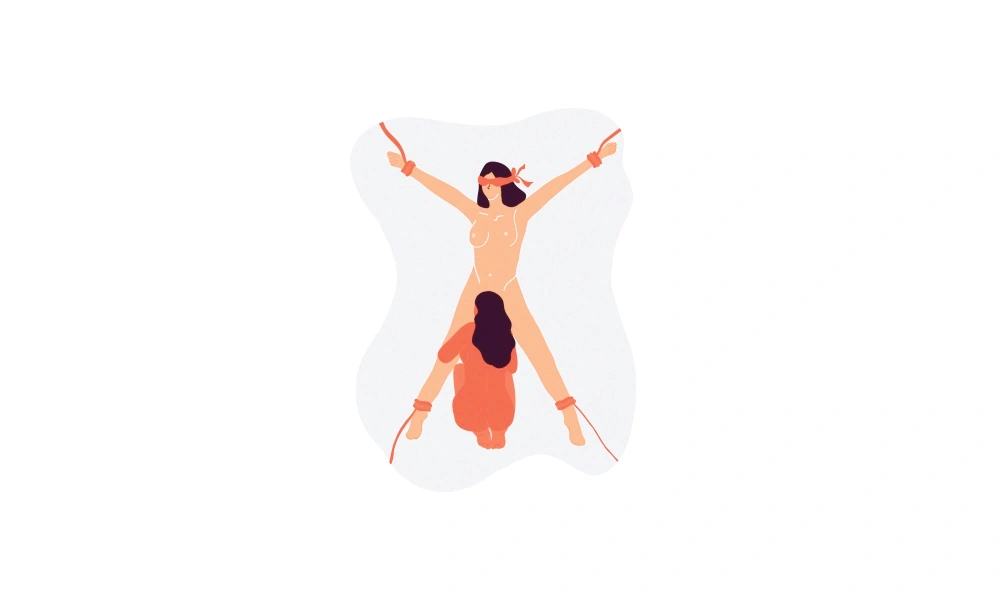
Spread Eagle is one of the easiest bondage positions to understand. The restrained person lies on the bed while the arms and legs are positioned apart, usually with cuffs or straps connected to separate attachment points.
The key is that “spread” does not mean stretched as far as possible. Leave the shoulders, hips, and knees in a range that feels natural, and adjust each strap separately rather than pulling all four limbs outward with equal tension.
An under-bed restraint system makes the position easier to change because you can loosen a strap without rebuilding the entire setup. Beginners can also start with wrists only and leave the legs completely free.
2. Sexy Spoon
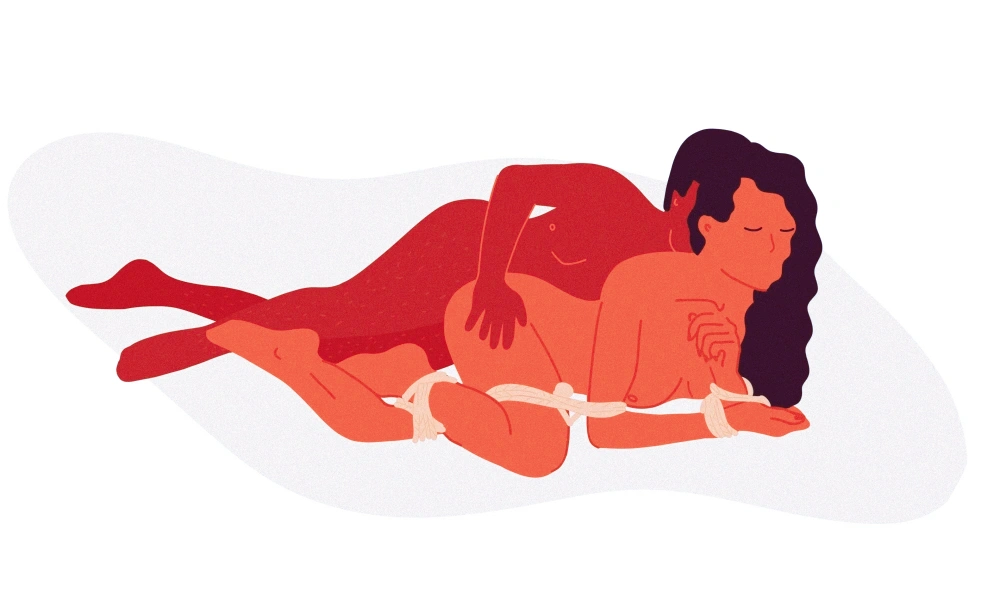
Sexy Spoon takes the familiar side-lying spooning position and adds restraint. It feels less exposed than many face-up bondage positions, which can make it appealing to people who want control and closeness at the same time.
A simple version uses wrist cuffs while both people remain comfortably on their sides. More structured versions may also control one leg, but there is no reason to add leg restraint until you know the side-lying position remains comfortable.
Check the lower arm periodically because body weight can compress it against the mattress. A pillow between the knees or beneath the head can make a noticeable difference during a longer scene.
If you decide to add gear, use code BG100 for $11 off orders of $59+ or $20 off orders of $100+.
Prices and promotion eligibility can change, so confirm the final total at checkout.
Two Easy Additions for Sexy Spoon
Soft wrist restraint and better body support fit this position naturally without turning it into a complicated setup.
.webp "Ouch Beginners Furry Handcuffs")
Ouch! Beginners Furry Handcuffs
A straightforward cuff option for couples who want wrist restraint without learning rope first. For Sexy Spoon, keeping the wrists in a comfortable front or side position is usually easier on the shoulders than pulling them high behind the back.
Best for: first-time wrist restraint, simple partner play, and positions where quick adjustment matters.
.webp "Liberator Jaz Motion Pillow")
Liberator Jaz Motion Pillow
A positioning pillow can support the hips, knees, torso, or back so the body does not have to hold an awkward angle just because restraints are in use. It can also be useful across many positions in VenusFun's sex positions collection.
Best for: improving support, changing angles, and making side-lying or bed-based positions easier to maintain.
3. Interrogation Chair
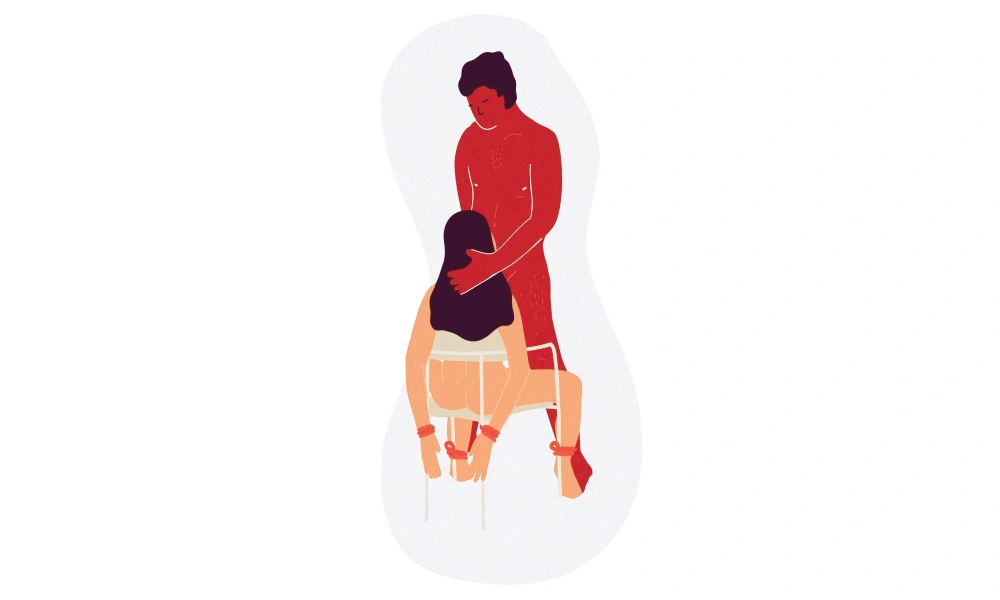
Interrogation Chair places the restrained person in a seated position, typically with the ankles controlled near the chair legs and the hands restrained separately. It creates a strong visual sense of control without requiring the flexibility of a floor-based tie.
The chair itself matters more than people sometimes expect. Use a sturdy chair on a non-slippery surface and place the back against a wall so it cannot tip backward if the seated person shifts their weight.
Soft cuffs are easier to adjust than complicated rope around chair legs. Keep the ankles in a natural seated position and avoid pulling the wrists high behind the back, especially if the person already has limited shoulder mobility.
4. Bondage Doggy
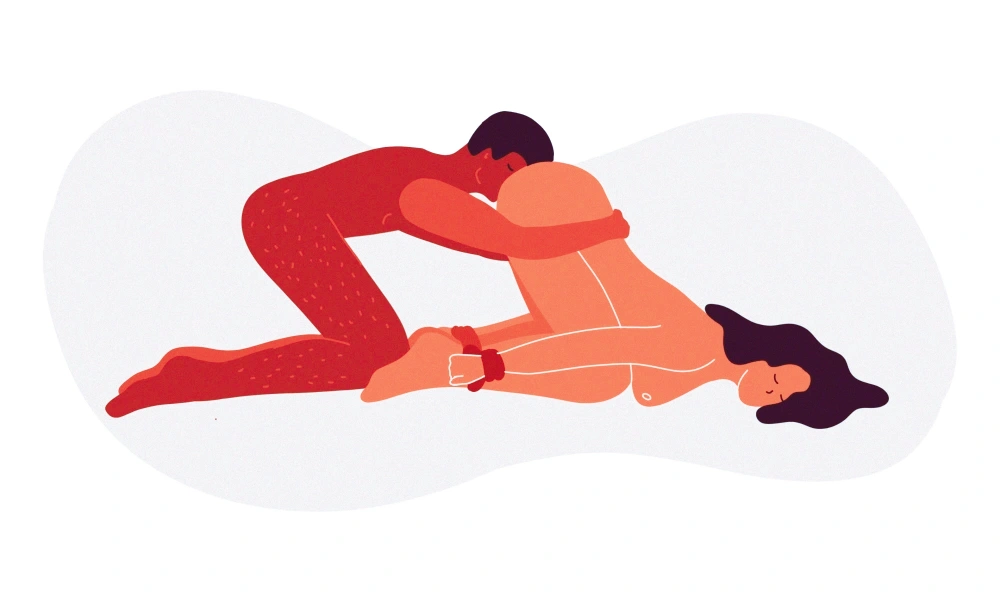
Bondage Doggy builds restraint into a kneeling, rear-facing position. Traditional variations may bring the hands behind the body or connect the upper and lower body more closely, but those versions can place significantly more demand on the shoulders and back.
A simpler approach is to keep the knees supported, place a pillow beneath the chest if needed, and restrain only the wrists. If hands behind the back feel awkward, move them in front or attach the cuffs somewhere that lets the shoulders stay neutral.
Knee comfort is another practical issue. A folded blanket or firm cushion often improves this position more than adding another restraint.
5. The Crab
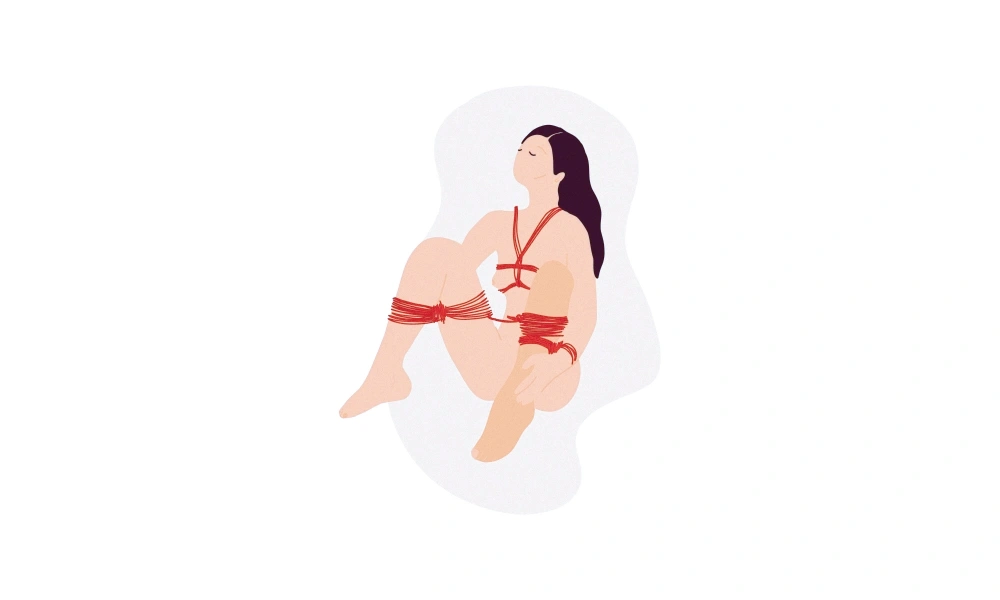
The Crab uses bent legs and controlled limb positioning to create a more open posture. One common form keeps each leg folded so the thigh and lower leg remain closer together, with wrist restraint optional rather than mandatory.
This position depends heavily on hip and knee mobility. The right angle is the one the restrained person can hold without joint pain or muscle strain, not the angle that creates the most dramatic shape.
If you use rope, this is the point where actual tying knowledge matters. Do not invent a knot on the body and hope it stays put. The VenusFun guide to beginner bondage knots covers foundational ties before you use rope during a scene.
6. The Puppy Style
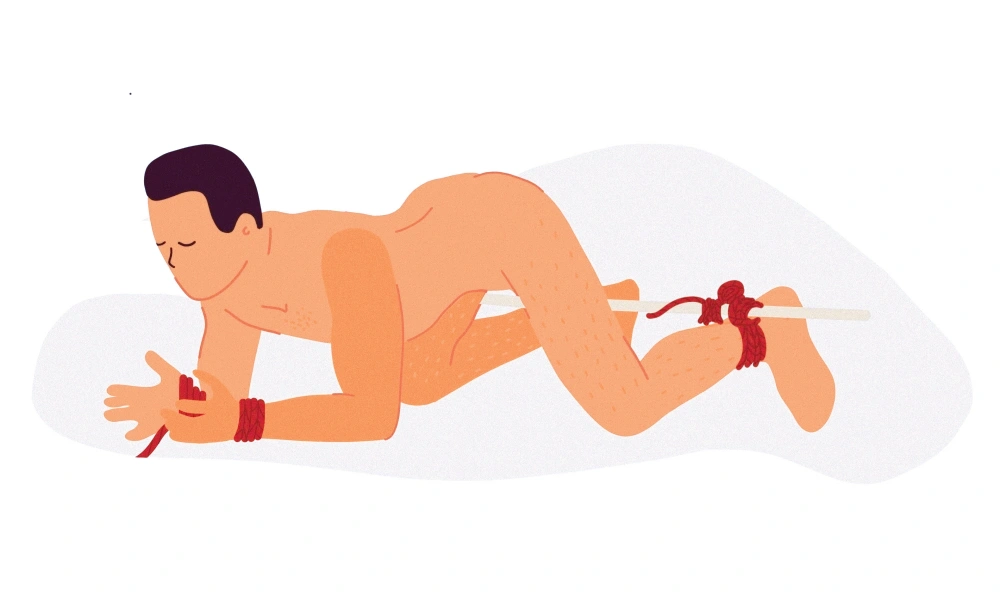
The Puppy Style uses a kneeling position with the lower body held in a more structured arrangement, often using a rigid bar or spreader-style control at the ankles while the wrists are restrained separately. It creates a noticeably stronger sense of being positioned than ordinary wrist cuffs.
Use equipment intended to handle restraint rather than improvising with broom handles, cleaning tools, or random household poles. A rigid object can twist, break, develop sharp edges, or move in a way that was never part of the plan.
This is also a good example of why you do not need to reproduce every part of a named position immediately. Try the kneeling posture and wrist restraint first, then decide whether adding lower-body control actually improves the experience.
7. Spreader Bar Legs
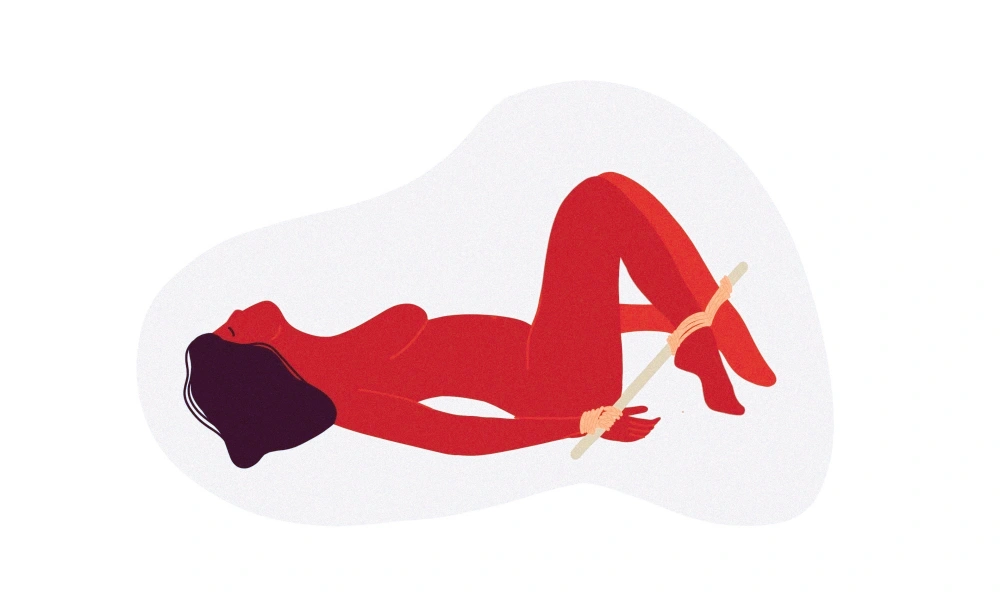
Spreader Bar Legs uses a bar attached to ankle cuffs to maintain a chosen distance between the legs. Unlike a rope tie that can change shape as someone moves, a correctly sized bar gives the position a more predictable structure.
That does not mean wider is better. Choose a spacing that the person can hold comfortably without pulling at the hips, groin, knees, or ankles. If a bar is adjustable, begin narrower and increase only if the position still feels natural.
This setup is one reason bondage toys and BDSM accessories are best selected by function rather than by how many pieces come in a kit. A well-fitting cuff and stable attachment can be more useful than a box of accessories you never need.
8. Hogtie
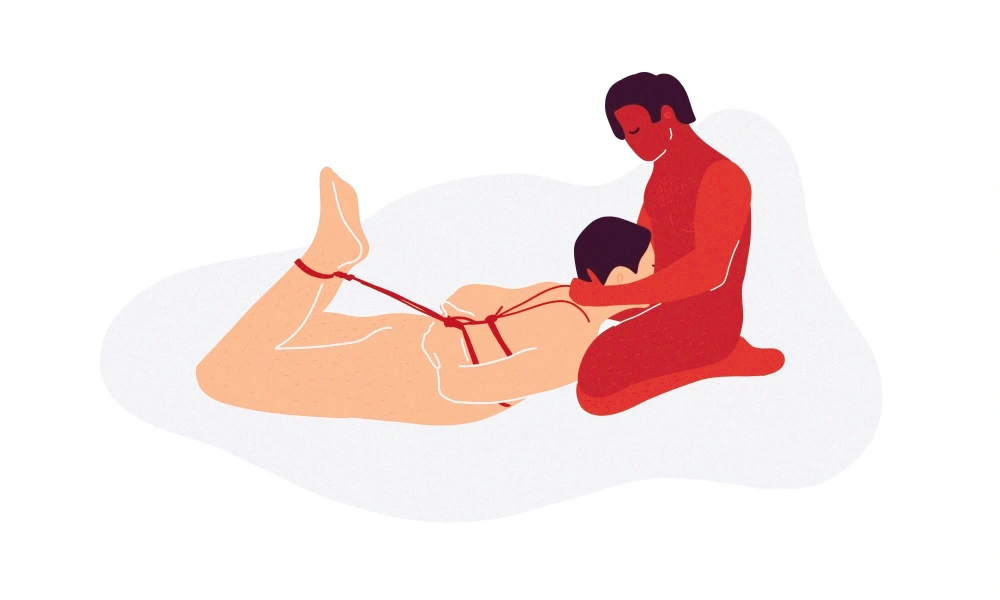
Hogtie places the restrained person on their stomach with the wrists behind the body and the legs bent, then connects the upper and lower restraints. The result is visually unmistakable, but the position can load the shoulders, back, hips, and knees at the same time.
For that reason, Hogtie is not one of the best bondage positions for a first session. Someone who already finds hands-behind-back restraint uncomfortable has no reason to progress to a position that adds more joint flexion and less freedom to reposition.
If experienced partners choose to try it, keep the connection loose enough that the body is not being forced into a deep arch. Have the release method immediately available and check in much more often than you would in a relaxed bed position.
10 Bondage Tips & Ideas Beyond Basic Restraint
You do not need ten new pieces of equipment to make bondage feel different. Small changes in who controls movement, what senses are available, and how much of the body is restrained can produce a completely different scene.
1. Try Verbal Bondage First
Agree that one partner will remain in a certain position without being physically tied. It creates a control dynamic while leaving them physically able to move if they want to stop.
2. Restrain Only the Wrists
Wrist restraint alone can change the entire dynamic. It is easier to monitor than full-body bondage and gives first-timers a clear sense of whether physical restriction is something they enjoy.
3. Keep the Hands in Front
Hands-behind-back bondage looks dramatic but asks more from the shoulders. Keeping the hands in front is easier to see, adjust, and release, making it a useful beginner variation.
4. Try a Blindfold Separately
Removing sight can intensify anticipation without restricting the limbs. Try it on its own before combining it with cuffs so you know how the loss of visual information feels.
5. Use the Bed as Your Main Support
A mattress supports the back, hips, knees, and shoulders while giving you room to change positions. It is usually easier to adapt than standing bondage or improvised furniture restraint.
6. Add Pillows Before More Gear
A pillow under the chest, hips, knees, or head can turn an awkward position into a comfortable one. Comfort improvements do not have to come from more bondage equipment.
7. Add Sensation Instead of More Restraint
Once a simple cuff setup feels comfortable, you can change the scene with nipple stimulation, vibration, suction, or other agreed sensations instead of making the restraint tighter or more complicated.
8. Introduce Impact Play Separately
If a flogger interests you, learn how its weight and tails feel before combining it with strong restraint. Being unable to move away changes how an impact can feel.
9. Switch Who Has Control
Partners do not have to keep the same roles every time. If both people are interested, switching who restrains and who follows instructions can reveal very different preferences.
10. Finish While It Still Feels Good
A first scene does not need to continue until someone is exhausted or desperate to get free. Ending while everyone is comfortable gives you a much clearer idea of what you would like to repeat.
Best Bondage Gear & Accessories for Different Styles
Bondage gear works best when it solves a specific problem. Soft cuffs simplify restraint, under-bed straps create attachment points, rope allows customized ties, and spreader bars maintain a defined position. Accessories such as clamps, stimulators, floggers, and chastity devices change the sensation or control dynamic rather than simply making a person “more tied up.”
| Gear Type | Best For | Learning Curve | Beginner Friendly? | What to Watch |
|---|---|---|---|---|
| Soft cuffs | Wrists, ankles, simple bed and chair restraint | Low | Yes | Fit and pressure points |
| Under-bed restraints | Spread Eagle and adjustable bed setups | Low | Yes | Joint angle and strap tension |
| Bondage rope | Customized ties | High | After learning basics | Tie placement, tightening and nerve pressure |
| Spreader bar | Controlled leg positioning | Low to moderate | With some experience | Hip, knee and ankle comfort |
| Sensory accessories | Changing sensation without adding restraint | Varies | Depends on product | Intensity, skin response and communication |
If you want a starter collection rather than individual pieces, compare the contents of bondage kits before buying. A useful kit is one where you can introduce items separately, not one that simply contains the highest number of accessories.
Sensory Add-Ons for a Simple Bondage Setup
These accessories can change sensation without requiring a more restrictive body position. Introduce one new sensation at a time so the restrained partner can tell you clearly what works.
.jpg "Rotating Sucking Clit Nipple Stimulator")
Rotating Sucking Clit & Nipple Stimulator
A compact option for adding focused suction and rotating stimulation while keeping the actual bondage setup simple. Start on a comfortable setting and move or remove it when the area becomes overly sensitive.
Best for: adding sensation to simple wrist or bed restraint without adding another restraint point.
.webp "Master Series Nipple Clamp BDSM")
Master Series Nipple Clamp BDSM
Adjustable clamps create a very different sensation from limb restraint. Treat pressure as its own activity and learn the adjustment range before using clamps on someone who is also unable to move freely. The VenusFun clamp guide covers gradual adjustment, body feedback, and when to stop.
Best for: experienced users who want controlled pressure as a separate sensory element.
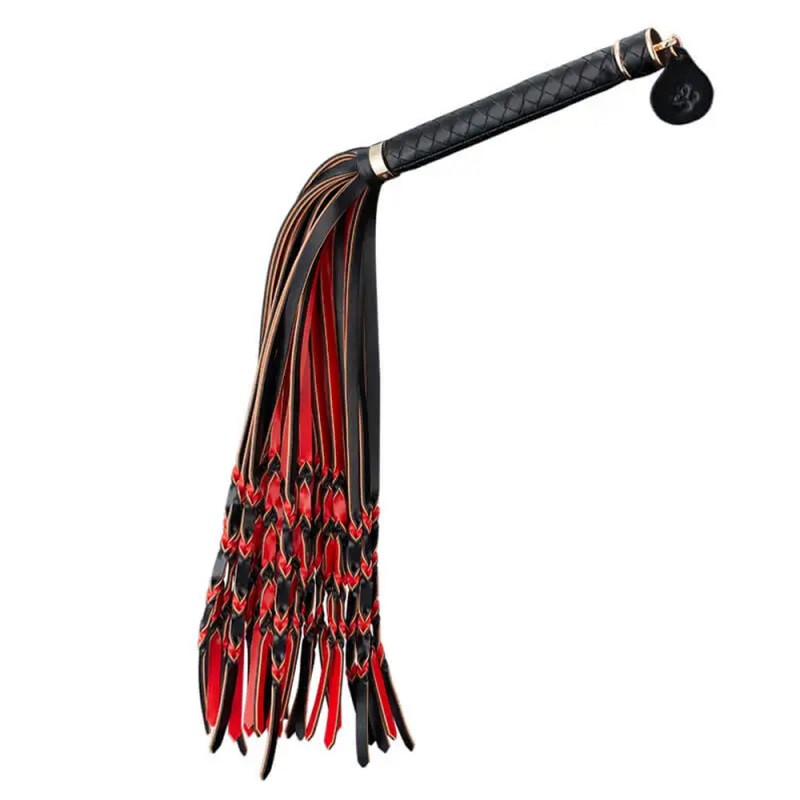
Lockink Red & Black Braided Tail Flogger
A flogger can add impact without changing the restraint itself. Practice controlling the swing and intensity before using it with a restrained partner, who has less ability to move away from an unexpected strike. For people exploring impact as part of a negotiated discipline scene, the VenusFun BDSM punishment guide explains how to separate agreed play from unwanted punishment.
Best for: negotiated impact play after both partners are already comfortable with the underlying bondage setup.
Sensory accessories are optional. A good bondage scene does not need pain, impact, suction, clamps, or vibration unless the people involved specifically want them.
Control-Focused Accessories for More Experienced Play
The following products change access or body positioning rather than replacing basic wrist or ankle restraints. They are better treated as separate, negotiated activities than as automatic additions to a beginner bondage kit.
If your interest is more about prolonged control than a specific bondage pose, VenusFun's post-orgasm torture guide discusses consent, intensity changes, and stop signals for that separate style of BDSM play.
.jpg "Master Series Captor Chastity Cage")
Master Series Captor Chastity Cage
Chastity shifts the focus from limb restraint to access and control. Fit, skin condition, circulation, hygiene, and immediate removal matter more than how long the device can theoretically be worn.
Best for: experienced, consenting partners who specifically want chastity or access-control play.
.jpg "XR Brands Petal Pusher Vagina Expander")
XR Brands Petal Pusher Vagina Expander
This is a localized positioning accessory rather than a wrist or ankle restraint. Introduce it independently, use compatible lubricant where appropriate, and stop rather than increasing tension if the device causes sharp pain, pinching, or persistent discomfort.
Best for: experienced users who specifically want controlled genital positioning as part of a negotiated scene.
How to Try Bondage for the First Time
Your first bondage session does not need a script. A simple five-step plan is enough to answer the questions that matter: Do we like restraint? Which position feels good? Is the gear easy to manage? Can we communicate normally once the scene starts?
-
Pick One Position
Spread Eagle with wrist restraint only, Sexy Spoon, or hands restrained comfortably in front are good starting points. Avoid making your first experiment a Hogtie or another position that limits several joints at once.
-
Agree on Limits Before the Restraints Go On
Be specific about what is included. Agreement to wrist cuffs does not automatically include blindfolds, clamps, flogging, genital devices, recording, or any other activity that happens to be nearby.
-
Choose Clear Stop Signals
Agree on a word that means stop immediately and another cue for “slow down” or “check this.” A simple non-verbal signal gives you a backup if speech becomes difficult or someone freezes instead of speaking.
-
Test the Restraint Before Starting the Scene
Put the cuffs or straps on, change position a little, and practice releasing them. Check that edges do not pinch, the closure does not tighten unexpectedly, and the restrained person can tell you clearly how their hands or feet feel.
-
Check In, Then Finish Deliberately
Ask about sensation and joint comfort before a problem develops. When you are finished, remove the restraint completely, check for unusual numbness or soreness, and talk about what you would keep or change next time.
Bondage Safety, Comfort & Stop Signs
Bondage safety is mostly about recognizing what restraint changes. A person who is tied or cuffed cannot always shift their weight, move away from pressure, straighten a joint, or reach the release mechanism on their own.
How Tight Is Too Tight?
Secure and tight are not the same thing. A restraint can stay in place without squeezing a limb as firmly as possible, and extra tightness does not create better control.
Stop and remove pressure if the restrained area develops numbness, tingling, weakness, sharp or increasing pain, or a noticeable loss of normal sensation. Pressure on peripheral nerves can produce pain, tingling, numbness, and weakness, so neurological changes should not be treated as something to “push through.”
Cleveland Clinic's overview of nerve compression symptoms explains why numbness, tingling, pain, and weakness deserve attention when pressure is placed on a limb.
Avoid Neck Restraint and Choking
Do not run rope or restraint straps around the neck or use bondage as a way to restrict breathing or blood flow. The consequences of neck compression are different from ordinary wrist or ankle pressure and can include permanent injury or death.
The National Coalition for Sexual Freedom describes sexual choking as an ultrahazardous activity and recommends lower-risk alternatives for people interested in the appearance or power dynamic without compressing the neck.
Do Not Leave a Restrained Partner Alone
Stay close enough to respond immediately. Equipment can shift, a joint can become uncomfortable, someone can become dizzy or anxious, or an unrelated emergency can suddenly make quick release necessary.
The more restrictive the setup, the less sensible it is to assume that the restrained person can solve a problem independently.
Keep the Exit Method Ready
Know exactly how every restraint comes off before using it. Keep keys beside the scene rather than in another room, and have appropriate safety shears available for rope or material that may need to be cut quickly.
If cutting inexpensive equipment is faster than trying to save it, cut it. Bondage gear is replaceable.
There Is No Universal “Safe Wear Time”
People sometimes ask which cuffs are most comfortable for extended wear or how many minutes a restraint can safely stay on. There is no useful single number because cuff width, fit, posture, movement, anatomy, and pressure all change how a restraint loads the body.
Wide padded cuffs generally spread pressure more comfortably than narrow rigid edges, but that does not make them something you can put on and forget about. Longer scenes require more checks, not fewer.
Communication Continues After You Start
A safeword is helpful, but it is not a substitute for paying attention. If the restrained person becomes unusually quiet, tense, confused, panicked, or less responsive, stop and check what is happening instead of waiting for a specific word.
Consent can also change halfway through a scene. Someone can enjoy the cuffs and decide they no longer want the blindfold, or enjoy the position and decide they do not want the next activity. That change does not need to be justified.
Common Bondage Mistakes
Choosing the Most Extreme Position First
Complicated does not mean better. Start with a position you can change easily before attempting Hogtie or other full-body restraint.
Forcing the Body to Match a Photo
Flexibility varies. Adjust limb angles, add support, or choose another position instead of forcing a shoulder, hip, or knee farther than it naturally wants to go.
Making Cuffs Tighter for More Control
Good restraint comes from appropriate equipment and attachment, not excessive compression around a wrist or ankle.
Using Random Household Items
Belts, cables, thin cord, and improvised bars may tighten, slip, pinch, break, or create concentrated pressure in ways they were never designed to handle.
Adding Everything at Once
Cuffs, blindfolds, clamps, impact play, and genital accessories each change the experience. Introduce them separately so consent and physical feedback remain clear.
Assuming Silence Means Everything Is Fine
People do not always speak up immediately when a position feels wrong. Regular, ordinary check-ins make it easier to correct a problem early.
FAQ About the Best Bondage
What is the best bondage position for beginners?
Spread Eagle with soft wrist cuffs or adjustable bed restraints is one of the easiest starting points because the body is supported and the restraint stays visible. Sexy Spoon and simple hands-in-front restraint are also beginner-friendly choices. Keep the first setup loose enough to adjust easily and leave some limbs free until you know how restraint feels.
What is the best bondage gear for beginners?
Wide, adjustable soft cuffs are usually easier to learn than rope because they require little technical knowledge and can be removed quickly. Under-bed restraints are another useful option for bed-based positioning. Choose equipment for fit, comfort, adjustability, and easy release rather than buying the largest kit or the most restrictive-looking device.
Are cuffs or rope better for bondage?
Cuffs are easier for most beginners, while rope offers more customization once you understand safe tying. Rope is not automatically better because it is more versatile. If you are interested in rope bondage, learn basic non-tightening ties and body placement before trying complex positions during a sexual scene.
How tight should bondage restraints be?
Restraints should feel secure without causing sharp pain, increasing pressure, tingling, numbness, weakness, or loss of normal sensation. There is no single finger-width test that works for every body and every restraint. Check the area regularly and release the restraint when sensation or comfort changes.
Is Hogtie safe for beginners?
Hogtie is better treated as an advanced position, not a first-session setup. It combines hands-behind-back restraint with bent legs and reduces the person's ability to reposition several joints. Beginners can explore the same sense of control with simpler wrist restraint or supported bed positions before considering more restrictive full-body configurations.
Which bondage position is most comfortable?
Comfort depends on mobility and personal preference, but supported positions such as Sexy Spoon or a relaxed Spread Eagle variation are easier for many people than kneeling or tightly folded positions. Use pillows, keep joints within a natural range, and choose wide adjustable cuffs. A comfortable position should remain easy to change as soon as something starts feeling wrong.








comments