


.webp)
.webp)
.webp)
.webp)



 By
By
A good blow job combines comfortable positioning, moisture, controlled pressure, a repeatable rhythm, and honest feedback. The giver should stay in control of depth and breathing, while the receiving partner communicates without pushing the giver’s head or changing the pace without agreement. Deep-throating, swallowing, eye contact, and orgasm are all optional.
Begin gently, use a hand to support the mouth’s movement, and adjust only one sensation at a time. A technique that both people can sustain is more useful than an intense technique that causes gagging, jaw pain, friction, or loss of control.
Main Goal
Create comfortable, consistent stimulation that can be adjusted according to real feedback.
Main Control
The giver controls depth, breathing, jaw movement, breaks, and the decision to continue.
What Is Optional
Strong suction, deep-throating, swallowing, toys, eye contact, and orgasm are never requirements.
When to Stop
Stop for pain, breathing difficulty, panic, bleeding, forceful gagging, numbness, or unwanted pressure.
What Makes a Blow Job Feel Good
A blow job, also called fellatio, is oral stimulation of a penis using the lips, tongue, mouth, and sometimes the hands. The sensation usually comes from warmth, moisture, lip pressure, tongue movement, suction, and rhythm rather than from blowing air.
There is no universal technique that feels best to everyone. Some people prefer focused attention around the head, while others respond more to hand stimulation, full-shaft movement, slow pressure, or a steady combination of sensations.
Understanding the receiver’s perspective can make it easier to interpret feedback without assuming that everyone experiences the same sensations. VenusFun’s guide to what a blowjob feels like explores how warmth, moisture, pressure, rhythm, trust, and personal preference can shape the experience.
Consistency Usually Matters More Than Complexity
Variety can build excitement, but changing the movement every few seconds may interrupt a rhythm that is already working. When the receiver gives stronger positive feedback, maintain the same pattern for a while before experimenting again.
A useful rhythm must also be sustainable for the giver. When the jaw, neck, knees, or breathing begins to feel strained, reduce depth, switch to more hand stimulation, reposition, or take a complete break.
Pleasure Is Not Measured by Depth
Many sensitive areas can be reached without taking the entire penis into the mouth. The head, the ridge beneath it, the underside of the shaft, and the frenulum may respond to lip and tongue contact, although sensitivity varies from person to person.
Deeper movement may appeal to some consenting adults, but it is not proof of skill and is not required for a great blow job. Shallow oral contact combined with a lubricated hand can provide continuous stimulation while protecting the giver’s breathing and comfort.
Before You Start: Consent, Comfort, and Protection

A few decisions made before oral sex can prevent confusion later. Discuss boundaries while both people can speak easily rather than waiting until the giver’s mouth is occupied or the receiver is close to orgasm.
Agree on Boundaries and the Finish
Confirm whether the giver is comfortable with oral contact, deeper movement, hair or head touching, barrier use, and ejaculation near the mouth. A person can agree to one action while declining another, and either partner can change their mind at any point.
Choose simple signals for “slower,” “shallower,” “pause,” and “stop.” A hand placed firmly against the receiver’s hip can be an additional stop signal, but the giver should still be able to move away independently.
Check for Symptoms or Irritation
Oral sex can transmit sexually transmitted infections, including gonorrhea, chlamydia, syphilis, herpes, and HPV. The CDC’s guidance on STI risk and oral sex explains that infections may affect the mouth, throat, genitals, or more than one area at the same time.
Consider postponing oral contact when either person has unexplained sores, blisters, unusual discharge, significant mouth irritation, or active bleeding. Many infections cause few or no obvious symptoms, so testing and professional medical advice are more reliable than appearance alone.
Choose Whether to Use a Condom
An external condom can reduce contact with genital fluids and some covered skin during oral sex on a penis. Barriers reduce risk but do not cover every potentially affected area, so they cannot eliminate every STI risk.
Planned Parenthood’s guidance on making sex safer recommends condoms or other barriers for oral, vaginal, and anal contact. Use a new condom for each session and stop if it tears, slips, or rolls significantly.
Condom Options for Oral Sex
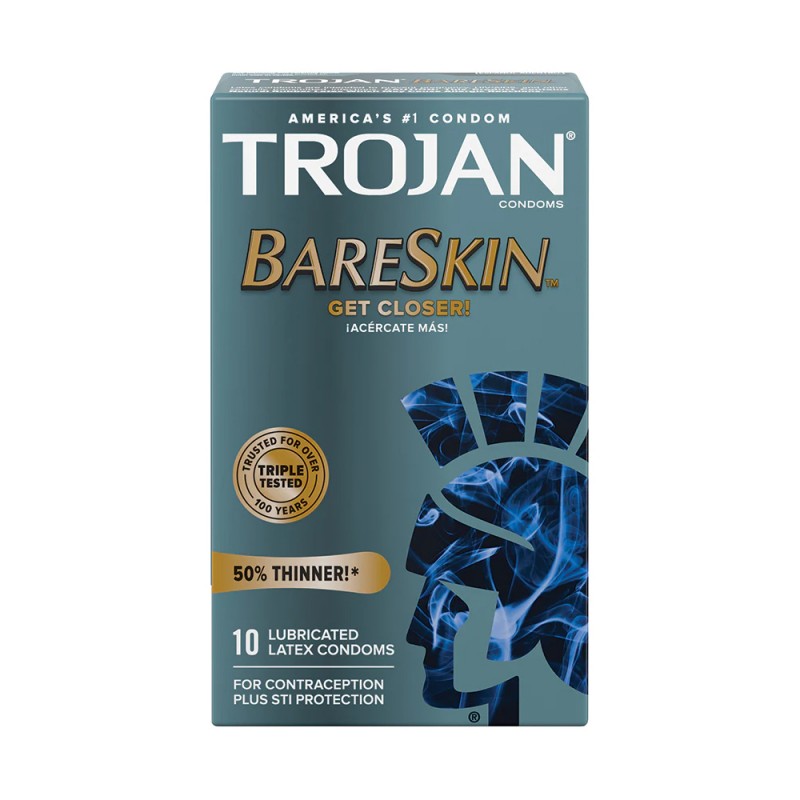
Trojan BareSkin Condoms
A thin condom option for adults who want a barrier during oral or partnered sex. Confirm the fit before contact begins.
Remember: use a new condom for each session and stop if it slips or breaks.
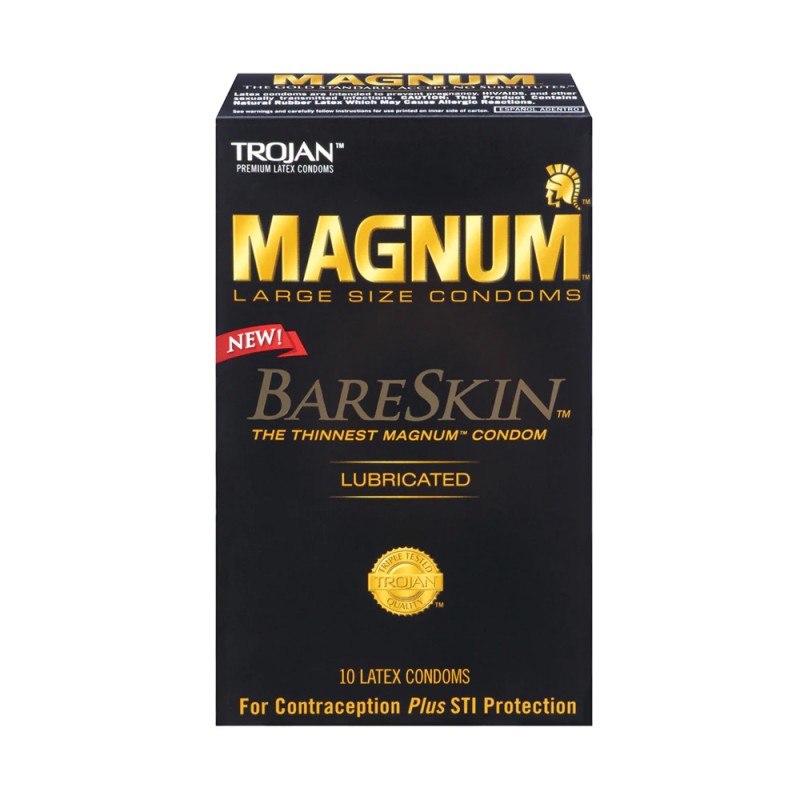
Trojan Magnum BareSkin Condoms
A larger-fit condom option for users who find standard sizes restrictive. A secure fit should stay in place without painful tightness.
Fit matters: do not choose a larger size unless it stays securely in place.
Prepare Moisture and Physical Support
Saliva may provide enough moisture at first, but it can dry during a longer session. A suitable flavored oral gel or edible lubricant can add glide or flavor, while a regular water-based lubricant may be useful for the hand if its label does not approve oral use.
Always check the product directions before placing a lubricant in or near the mouth. When using a latex or polyisoprene condom, avoid oil-based products because oil can weaken these materials; the FDA’s latex condom guidance recommends compatible water-based lubrication.
Optional Oral Gels and Lubricants
.jpg "JO BLo Orange Limeade Flavored Oral Gel")
JO BLo Orange Limeade Flavored Oral Gel
A flavored oral gel for adults who want to add an orange-limeade taste during consensual oral play.
Use carefully: start with a small amount and stop if irritation develops.
.webp "Wet Stuff Slippery Oral Gel")
Wet Stuff Slippery Oral Gel
An oral-use gel for adding glide during intimate contact. Apply only as directed and use less than you think you need at first.
Best practice: patch-test unfamiliar formulas and avoid broken or irritated skin.
.webp "Wet Stuff Strawberry Edible Lubricant")
Wet Stuff Strawberry Edible Lubricant
A strawberry-flavored edible lubricant for adults who prefer a sweeter taste during oral or external intimate play.
Check first: review the ingredient list when either partner has flavoring sensitivities.
.webp "S-Vibe Snail Water-Based Lubricant")
S-Vibe Snail Water-Based Lubricant
A water-based option for adding glide to hand stimulation. Check the product label before allowing contact with the mouth.
Use for: reducing drag when the hand and mouth are working together.
The same comfort-first principles apply when oral sex happens early in the day, although morning breath, privacy, timing, and whether both partners are fully awake can affect the experience. For more situation-specific advice, read VenusFun’s morning blowjob tips, including practical guidance on consent, hygiene, preparation, and keeping the moment relaxed rather than rushed.
How to Give a Blow Job in 8 Actions
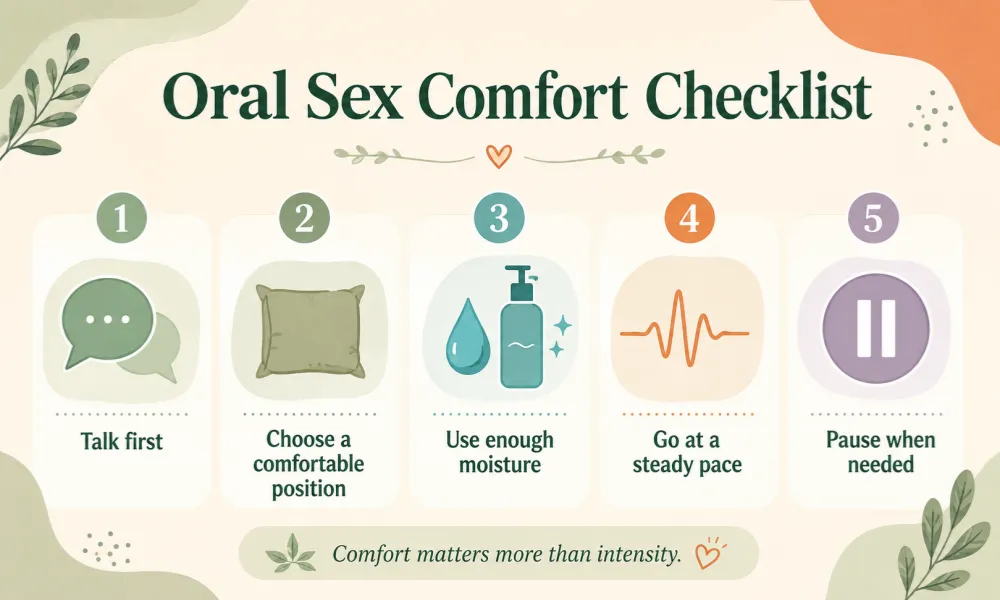
The following sequence builds intensity gradually while keeping the giver in control. Each action can be shortened, repeated, adjusted, or skipped according to comfort and preference.
-
Agree on What Is Comfortable
Confirm that both people want oral sex and discuss limits before beginning. Ask about preferred pressure, sensitive areas, head touching, barrier use, deeper movement, and where ejaculation may happen.
Establish a clear stop signal and treat it as immediate. Consent should remain active throughout the experience rather than becoming a one-time permission for everything that follows.
-
Set Up a Stable Position
Choose a position that lets the giver keep their neck relatively neutral, breathe comfortably, and move away without assistance. Sit on the bed, place a cushion under the knees, or ask the receiver to lie down when kneeling feels uncomfortable.
Keep water, tissues, a towel, lubricant, or a condom within reach. The giver should not become trapped between furniture, against a wall, or beneath the receiver’s body weight.
-
Begin With External Touch
Start with the hands, gentle kisses, or tongue contact around agreed areas such as the inner thighs, lower abdomen, base of the shaft, or surrounding skin. This creates arousal while giving both people time to notice sensitivity and comfort.
Avoid starting with maximum pressure or depth. A gradual beginning makes later changes easier to recognize and gives the giver time to settle into a sustainable posture.
-
Start With the Lips and Tongue
Curl the lips slightly over the front teeth and begin around the head with gentle pressure. Use the tongue around the ridge, across the underside, or near the frenulum, adjusting carefully because sensitivity varies.
Keep the mouth relaxed and use enough moisture to prevent dragging. There is no need to take a large portion of the shaft into the mouth.
-
Add a Hand to Control Depth
Wrap one lubricated hand comfortably around the lower shaft without squeezing tightly. The hand can limit how far the penis enters the mouth while continuing movement along the area the mouth does not cover.
Move the hand and mouth in the same general direction to create a continuous sensation. This reduces pressure on the jaw and makes deep-throating unnecessary.
-
Build a Repeatable Rhythm
Choose a pace that can be maintained for more than a few movements. Coordinate the lips, tongue, and hand, then keep the pattern steady long enough to assess the receiver’s response.
Small changes are easier to evaluate than dramatic switches. When the receiver gives stronger positive feedback, maintain the same movement rather than immediately introducing something new.
-
Adjust From Real-Time Feedback
Ask simple questions such as “Softer or firmer?” or “Keep this pace?” Direct feedback is more reliable than guessing from sounds alone, especially because some people become quieter as stimulation becomes more intense.
Change one variable at a time, such as suction, speed, tongue pressure, hand pressure, or depth. Pause when the giver needs to breathe, swallow, stretch the jaw, add lubricant, or reposition.
-
Handle the Finish and Aftercare
Ask the receiver to give advance notice before ejaculation. Follow the agreed plan, whether that means using a condom, stopping oral contact, switching to a hand, moving away, or allowing ejaculation in another agreed place.
End the movement gradually and check how both people feel. Clean up, drink water if desired, address any soreness, and discuss which pressure, rhythm, or position worked best without measuring success only by orgasm.
How to Adjust Pressure, Rhythm, and Depth
Technique becomes easier to refine when each sensation is treated as a separate control. Increasing speed, suction, depth, and hand pressure simultaneously can create discomfort before either person identifies which change caused it.
| Variable | To Make It Gentler | To Add Intensity | Avoid |
|---|---|---|---|
| Depth | Focus near the head and keep a hand around the lower shaft. | Increase gradually while the giver remains in control. | Sudden thrusting, head pushing, or treating gagging as a goal. |
| Speed | Use slower movements with short pauses. | Add brief faster sections while keeping the motion controlled. | Increasing speed after the jaw or neck begins to tire. |
| Suction | Relax the cheeks and use light lip pressure. | Add slightly firmer suction during selected movements. | Strong suction that creates pain, bruising, or jaw tension. |
| Tongue Movement | Use broad, slow contact along the underside or around the head. | Use smaller movements on an area the receiver identifies as sensitive. | Fast, rough contact on sensitive tissue without checking. |
| Hand Pressure | Loosen the grip and add compatible lubricant. | Use a firmer but comfortable grip coordinated with the mouth. | Dry rubbing, pinching, or forcefully twisting the skin. |
| Moisture | Pause to add saliva or a suitably labeled product. | Maintain enough glide for smooth hand-mouth coordination. | Continuing through sticky, hot, or dragging friction. |
Change One Variable at a Time
When the receiver asks for more intensity, clarify what “more” means. They may want a faster rhythm, firmer pressure, more tongue contact, stronger hand stimulation, or simply the same movement without interruption.
Test one adjustment for several movements before adding another. This makes feedback more useful and prevents the experience from escalating faster than comfort.
Circumcised and Uncircumcised Penises
Circumcision status does not determine one correct technique. A circumcised penis may benefit from additional moisture if the skin feels less mobile, while an uncircumcised penis may have foreskin that moves naturally with the hand or mouth.
Do not force the foreskin backward or keep it retracted if that feels tight or painful. Ask how much movement is comfortable and pay attention to areas that feel especially sensitive.
When Oral Sex Does Not Lead to Orgasm
Not everyone orgasms from oral sex, even when it feels pleasurable. Stress, fatigue, medication, alcohol, reduced sensitivity, distraction, performance pressure, and personal stimulation preferences can all affect orgasm.
Ask whether the receiver wants the same rhythm, firmer hand stimulation, another activity, or a break. Continuing indefinitely while the giver becomes sore rarely improves the experience, and stopping does not make the attempt unsuccessful.
Optional External Vibration
Some adults enjoy adding gentle vibration while keeping the main oral technique simple. A compact bullet vibrator can be held against the outside of the cheek, along the jawline, or beneath the chin so that mild vibration travels through the surrounding tissue.
Keep the device outside the mouth, begin on a low setting, and avoid pressing it against the teeth. Remove it immediately if the vibration causes jaw discomfort, tooth sensitivity, facial numbness, dizziness, or an unpleasant sensation.
Optional Bullet Vibrators for External Sensation
.webp "Blush Play With Me Bullet Vibrator")
Blush Play With Me Bullet Vibrator
A compact bullet vibrator that can provide optional external vibration during a pause or alongside slow oral stimulation.
Use externally: keep the device outside the mouth and away from the teeth.
.webp "Femme Funn Densa Flexible Bullet Vibrator")
Femme Funn Densa Flexible Bullet Vibrator
A flexible bullet-style vibrator for adults who want adjustable external contact during partnered play.
Start low: stop if vibration causes numbness, discomfort, or tooth sensitivity.
Adults who want a hands-free option or a different form of solo or consensual couple play may also consider an automatic male masturbator. VenusFun’s comparison of the best blowjob machines for 2026 covers different movement styles, control features, practical trade-offs, and buying considerations. These devices are optional alternatives and do not replace suitable lubrication, cleaning, communication, or attention to comfort.
Comfortable Blow Job Positions
The best position protects the giver’s breathing, neck, jaw, knees, and ability to move away. A visually dramatic position is not automatically more pleasurable, and a difficult position should not become a performance target.
Comfortable positioning and clear signals matter even more when more than two adults are involved. Those considering a consensual shared oral experience can read VenusFun’s guide on how to give a double blowjob, while applying the same principles of communication, personal boundaries, steady pacing, and the right to pause at any time.
| Position | Giver Control | Physical Effort | Practical Adjustment |
|---|---|---|---|
| Receiver Lying Down | High | Low to moderate | The giver can kneel, sit, or lie beside the receiver and control the angle from above. |
| Receiver Sitting | High when thrusting is avoided | Moderate | Use a cushion under the giver’s knees and keep the receiver’s hips relatively still. |
| Side-Lying | High | Low | Both people lie on their sides, reducing pressure on the giver’s knees and neck. |
| Receiver Standing | Moderate | Higher for the giver | Use soft knee support and stop before neck, back, or knee strain develops. |
| Giver Lying Back | Low unless carefully agreed | Lower muscular effort but greater airway concern | Keep the receiver’s weight off the giver and establish an immediate stop signal. |
Receiver Lying Down
Having the receiver lie on their back often gives the giver the most freedom to control the angle. The giver can kneel between the legs, sit near the hips, or lie beside the body in a position that allows frequent breaks.
This setup also makes hand-mouth coordination easier because the receiver’s pelvis can remain relatively still. Ask the receiver not to thrust unless both people have explicitly agreed on a limited movement range.
Receiver Sitting
The receiver sits on the edge of a stable bed or chair while the giver kneels or sits lower. This position allows easy communication, but knee and neck support matter during a longer session.
A folded towel or firm cushion can reduce pressure on the knees. The chair should not roll, swivel unexpectedly, or place the giver between unstable furniture.
Side-Lying
A side-lying position can reduce strain because the giver does not need to support the upper body continuously. It works well when kneeling is uncomfortable or when both people prefer a slower experience.
The angle may limit depth, which can help with a sensitive gag reflex. Use the hand to maintain shaft stimulation when the mouth’s movement range is smaller.
Receiver Standing
A standing receiver and kneeling giver can provide direct access, but the position places more demand on the giver’s knees, neck, and balance. Keep the receiver’s hips still and provide a soft, stable surface beneath the giver.
Stop if the giver feels trapped against a wall, furniture, or the receiver’s legs. Standing does not give the receiver permission to hold the head or thrust forward.
Managing Gag Reflex, Jaw Fatigue, and Teeth
Discomfort is usually a reason to adjust the technique, not something to overcome through force. A sensitive gag reflex, jaw fatigue, neck strain, and accidental tooth contact can often be reduced through shallower movement and greater use of the hand.
Reduce Depth Instead of Fighting the Gag Reflex
The gag reflex is a protective response and varies from person to person. Keeping stimulation near the head while one hand covers the lower shaft can provide a continuous sensation without placing the penis deep in the mouth.
Choose an angle that keeps the neck comfortable and allows the giver to move backward immediately. Pause at the first sign of uncontrolled gagging, coughing, panic, vomiting, or difficulty breathing.
Use the Hand to Extend the Motion
A lubricated hand can continue the rhythm while the mouth takes a break. It can also act as a depth limit, reducing the chance of sudden movement farther into the mouth.
Coordinate the hand with shorter lip and tongue movements rather than trying to cover the entire shaft with the mouth. Loosen the grip if the skin pulls, twists, or becomes uncomfortable.
Protect the Teeth With the Lips
Curling the lips gently over the front teeth creates a softer contact surface. Keep the jaw loose and avoid opening wider than feels sustainable because tired muscles make accidental scraping more likely.
Occasional light contact may happen, especially during a position change. Slow down, add moisture, and shorten the movement instead of clenching the mouth tightly.
Take Breaks Before Pain Develops
Switch to hand stimulation, kissing, or another agreed activity before the jaw or neck becomes painful. Brief pauses can preserve comfort without ending the entire experience.
Stop for sharp jaw pain, locking, numbness, significant neck pain, or symptoms that continue after rest. Persistent or recurrent symptoms deserve medical or dental advice rather than repeated attempts to push through them.
- Difficulty breathing or an inability to move away
- Forceful gagging, vomiting, choking, or panic
- Sharp, burning, tearing, or worsening pain
- Unexpected bleeding from the mouth or genitals
- Jaw locking, numbness, or sudden severe pain
- A condom tearing, slipping off, or becoming damaged
- A partner becoming distressed, confused, unresponsive, or unusually quiet
- Any ignored request or signal to pause or stop
Safety, Hygiene, and Common Mistakes
STI Risk and Barrier Use
Oral sex does not cause pregnancy by itself, but it can transmit sexually transmitted infections. A condom can reduce direct contact with genital fluids and covered skin during oral sex on a penis.
Barriers may be especially useful with a new partner, when testing status is unknown, or when either person has additional partners. Do not continue over unexplained sores, active lesions, bleeding tissue, or unusual genital symptoms.
Basic Hygiene Without Overcleaning
Normal washing with water and a mild external cleanser is generally enough before sexual activity. Harsh fragrances, antiseptics, aggressive scrubbing, and internal cleansing can irritate tissue rather than make contact safer.
Wash hands before touching the mouth or genitals when practical, especially after anal contact. Clean reusable toys according to their care instructions and do not move an unwashed device between the anus, genitals, and mouth.
Common Blow Job Mistakes
Starting Too Intensely
Immediate speed, suction, or depth gives little time to assess sensitivity and comfort.
Changing Constantly
Too much variation can interrupt a rhythm that was already producing a positive response.
Ignoring Dryness
Sticky or dragging movement increases friction and makes accidental tooth contact more likely.
Chasing Maximum Depth
Depth does not guarantee pleasure and may reduce breathing control or trigger forceful gagging.
Assuming Silence Means Yes
Lack of objection is not permission for thrusting, head pushing, ejaculation, or swallowing.
Treating Orgasm as a Test
Pressure to finish can make arousal harder and encourage the giver to continue after becoming sore.
Aftercare and Checking In
After oral sex, check for jaw soreness, mouth irritation, genital discomfort, condom failure, or unexpected bleeding. Clean up in a way that feels comfortable and avoid harsh products on sensitive tissue.
A brief conversation can improve the next experience. Ask which pressure, rhythm, hand position, flavor, and body setup worked best, and whether any boundary or signal needs to be clearer.
FAQ About Giving a Blow Job
How deep should you go during a blow job?
Only go as deep as feels comfortable to the giver. Most pleasure does not require taking the entire penis into the mouth. Keeping a hand around the lower shaft can limit depth while extending the movement. Move shallower or stop if breathing becomes difficult, gagging feels overwhelming, or either person loses control of the pace.
What helps with a strong gag reflex?
Reduce depth and keep the giver in control. Focus the lips and tongue around the head while one hand stimulates the remaining shaft. Choose a position with a comfortable neck angle and pause before gagging becomes forceful. Deep-throating is optional and is not required for a good blow job.
Is it normal for teeth to touch?
Occasional light contact can happen, but scraping should be avoided. Curl the lips slightly over the front teeth, keep the jaw relaxed, maintain enough moisture, and shorten the movement when the mouth becomes tired. A hand can continue the rhythm while the jaw rests.
Do you have to swallow?
No. Swallowing is always optional and should be discussed before ejaculation. The giver may prefer a condom, a towel, another agreed location, hand stimulation, or stopping oral contact first. Consent to oral sex never automatically includes ejaculation in the mouth or on the face.
Can oral sex transmit sexually transmitted infections?
Yes. Oral sex can transmit infections including gonorrhea, chlamydia, syphilis, herpes, and HPV. A condom can reduce exposure during oral sex on a penis, although no barrier removes every risk. Consider postponing contact when either partner has unexplained sores, bleeding, unusual discharge, or other possible infection symptoms.
Why might a partner not orgasm from oral sex?
Stress, fatigue, medication, alcohol, reduced sensitivity, distraction, performance pressure, and personal preferences can all delay or prevent orgasm. It does not automatically mean the technique was poor. Ask whether they want the same rhythm, hand stimulation, another activity, a break, or to stop.










comments