







 By
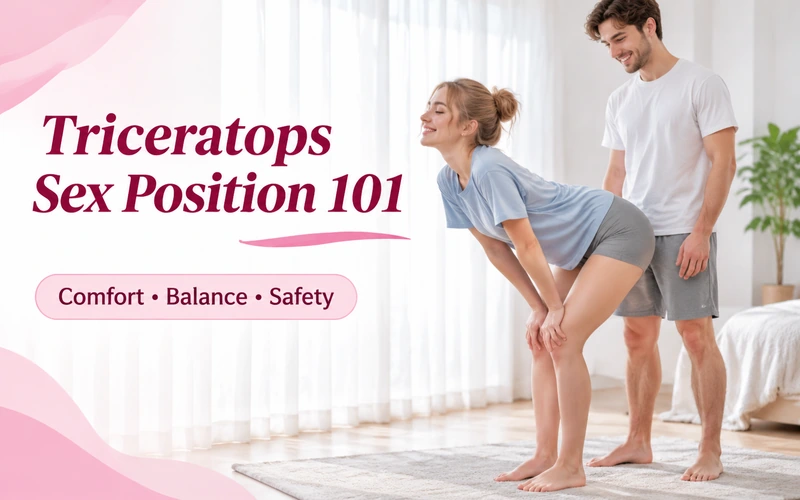
The triceratops sex position is a standing rear-entry position in which the receiving partner bends forward while the penetrating partner stands behind them. It combines a forward-leaning posture with a doggy-style angle and can be adapted for different heights, flexibility levels, and comfort preferences. Neither partner needs to lift the other.
What Is the Triceratops Sex Position?
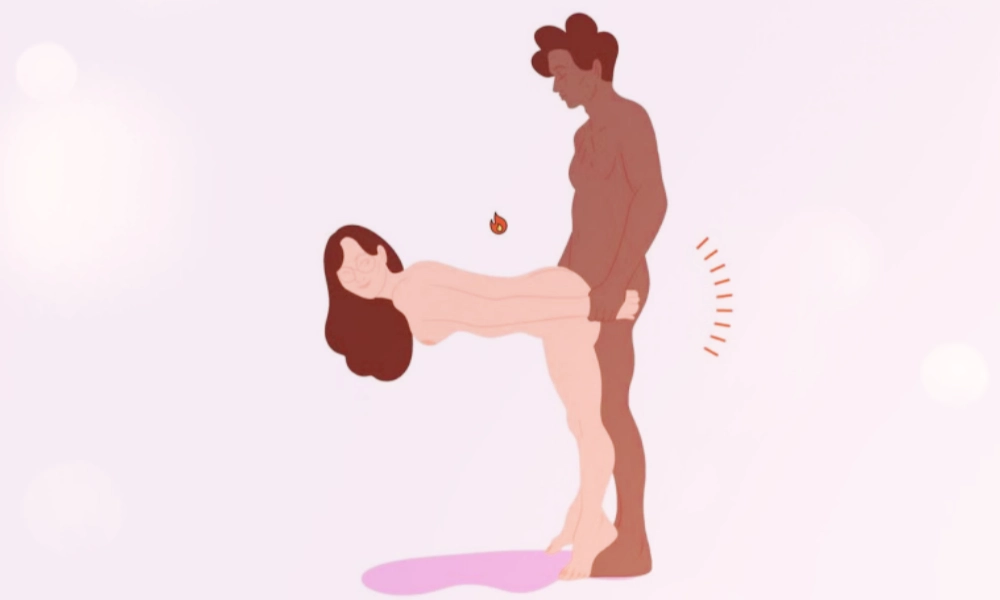
The triceratops position is a variation of standing doggy style. The receiving partner leans forward with their upper body angled toward the floor, while the penetrating partner stands behind them. The receiving partner may extend their arms alongside their body, position them behind their back, or use a nearby surface for support.
Its name comes from the general shape the partners create during the position. Unlike some standing sex positions that require one person to support the other's weight, this variation keeps both partners on their own feet.
How Is It Different From Standing Doggy Style?
The two positions are closely related, and their names are sometimes used interchangeably. However, the triceratops position generally refers to a more specific forward-leaning arrangement in which the receiving partner may position their arms alongside or behind their body.
Standing doggy style is a broader category within the wider range of standing sex positions. The receiving partner might lean against a wall, rest their hands on a table, or remain more upright. The triceratops variation places more emphasis on the forward bend and the partners' arm positioning.
How to Do the Triceratops Sex Position Step by Step
The standing version requires some balance and lower-body stability, but it does not require either partner to lift the other. Starting with a comfortable posture before introducing penetration makes it easier to identify any awkward angles or pressure points.
1. Start With a Stable Standing Position
PreparationBoth partners stand facing the same direction, with the receiving partner in front. Keep enough space between the feet to maintain balance, and avoid standing with the legs so close together that movement feels restricted.
Choose a private location with a dry, non-slip floor. Move nearby objects out of the way, especially if you are using a compact space such as a bathroom.
2. Lean Forward From the Hips
Body positioningThe receiving partner gradually bends forward from the hips, allowing the upper body to angle toward the floor. Keep the knees slightly relaxed instead of locking them, and avoid forcing the back into a perfectly horizontal position.
The ideal angle depends on flexibility, height, and comfort. A smaller forward bend is perfectly acceptable if going lower creates tension in the lower back or hamstrings.
3. Find a Comfortable Arm Position
Balance and supportThe receiving partner can extend their arms alongside their body or position them behind them if this feels natural. The penetrating partner may gently hold their hands or forearms, but gripping the wrists is not necessary.
For additional stability, resting both hands on a sturdy table, countertop, or bed can be more comfortable. Avoid pulling the arms backward or using them to force a deeper bend.
4. Adjust the Height and Entry Angle
AlignmentThe penetrating partner moves into position behind the receiving partner. Both should make small adjustments to their stance until their bodies align naturally, without requiring either person to stand on their toes or strain their back.
If penetration is desired, begin gently and use adequate lubricant. There is no need to start with deep penetration or a fast rhythm.
5. Communicate and Adjust the Movement
Comfort firstStart with slow, controlled movements and check how both partners feel. The receiving partner can ask for a shallower angle, less pressure, a slower pace, or a pause at any time.
If either person feels unstable, tired, or uncomfortable, stop and reposition. The goal is a comfortable shared experience, not maintaining the pose for as long as possible.
Standing vs. Kneeling: Which Variation Should You Try?
The triceratops position does not have to be performed while standing. A kneeling variation reduces the need to balance on your feet, while a supported standing variation can make the forward-leaning posture easier to maintain.
| Variation | Body Position | Potential Advantage | Things to Consider |
|---|---|---|---|
| Standing | Both partners stand, with the receiving partner leaning forward. | Allows flexible positioning and movement. | Requires balance, leg strength, and comfortable alignment. |
| Kneeling | Both partners kneel, with the receiving partner leaning forward. | Reduces the need to balance while standing. | May place pressure on the knees and needs suitable cushioning. |
| Bed-supported | The receiving partner rests their hands or upper body on a bed. | Provides additional support and may reduce arm fatigue. | Choose a comfortable height and avoid excessive back bending. |
| Wall-supported | The receiving partner uses a stable wall for balance. | Provides a simple way to steady the upper body. | Avoid slippery surfaces and unstable fixtures. |
How to Try the Kneeling Variation
Both partners move onto their knees, with the receiving partner positioned in front and leaning forward. A folded blanket or supportive cushion can help reduce pressure on the knees, particularly on hard floors.
The receiving partner can rest their hands or forearms on the bed for support. The penetrating partner should adjust their position gradually rather than forcing an angle that creates pressure on the receiving partner's back or hips.
When a Supported Variation Makes More Sense
If the standing version becomes tiring, using a bed, sturdy table, or wall for support may help. These modifications reduce the need to hold the entire upper body unsupported and can make it easier to maintain a comfortable posture.
A supported version is also worth considering when partners have different heights. Instead of stretching or bending excessively to match each other, adjust the supporting surface and foot position.
How to Make the Triceratops Position More Comfortable
Comfort often depends more on body alignment than on strength or flexibility. A few small adjustments can make the position easier to maintain and help prevent unnecessary strain.
1. Adjust for Height Differences
Height differences can make the standing triceratops position awkward. A shorter receiving partner may need to bend farther than is comfortable, while a taller receiving partner may need to adjust their knee position or stance.
Try changing the distance between your feet, slightly bending the knees, or using a sturdy bed or countertop for support. Avoid standing on loose objects or unstable furniture to create extra height.
2. Reduce Pressure on the Lower Back
Holding a deep forward bend for too long can create tension in the lower back and hamstrings. The receiving partner does not need to maintain a perfect 90-degree angle, despite how the position is sometimes described.
A shallower bend, relaxed knees, and a supported upper body may feel much better. If discomfort continues, switch to a position that allows a more neutral spine.
3. Avoid Pulling on the Wrists
Holding the receiving partner's wrists is sometimes associated with this position, but it is not essential. The wrists and shoulders can become uncomfortable if the arms are pulled backward, particularly when the receiving partner is already leaning forward.
Holding the forearms gently, placing the hands on a stable surface, or allowing the arms to remain free are all alternatives. Never use a grip that restricts movement without clear, ongoing agreement.
4. Use Lubricant When Needed
Friction can become uncomfortable during penetration, particularly when the angle changes or the session lasts longer than expected. A suitable personal lubricant can reduce friction and make movement more comfortable.
Water-based lubricant is a practical starting option for many couples. Silicone-based lubricant may last longer, but check its compatibility with any silicone toys you use. Also check condom compatibility on the product label.
If you are comparing different formulas, see our guide to water-based vs. oil-based lubricants. You can also browse the VenusFun personal lubricant collection to explore different options.
Pleasure, Control and Communication
One reason some couples enjoy the triceratops sex position is the physical dynamic it creates. The penetrating partner may have more control over movement, while the receiving partner may experience a different angle of penetration and a sense of physical closeness.
However, the position does not automatically create a dominant-submissive relationship. Some couples enjoy the physical arrangement without any BDSM elements, while others may incorporate consensual power exchange into their intimacy.
Can It Provide Deeper Penetration?
The forward-leaning posture changes the angle of the hips and may allow deeper penetration for some couples. However, the actual depth depends on anatomy, body proportions, flexibility, and positioning.
Deeper penetration is not necessarily more pleasurable. For some people, it can create uncomfortable pressure or pain, especially if movement is too forceful. Adjust the angle and depth according to the receiving partner's feedback.
Can the Position Include Clitoral Stimulation?
Yes. If the receiving partner enjoys external clitoral stimulation, one partner can use a free hand to provide gentle stimulation when the body position allows. Alternatively, the receiving partner can use their own hand or a suitable external vibrator.
Penetration alone does not produce orgasm for everyone. External stimulation can provide a different source of pleasure without requiring either partner to change the overall position.
If you enjoy exploring different types of external stimulation, you can browse VenusFun clitoral vibrators for additional options.
Is It Suitable for Dominant and Submissive Couples?
The position can be incorporated into consensual power exchange because one partner may guide the movement or hold the other's hands or arms. Some couples enjoy this sense of control, while others simply prefer the physical angle.
Discuss boundaries before introducing restraint, rougher movement, or dirty talk. Agree on what is comfortable, what is off-limits, and how either partner can ask to stop. A submissive role never means giving up the right to withdraw consent.
Safety Tips and Common Mistakes
Like other standing sex positions, the triceratops position requires attention to balance, muscle fatigue, and body alignment. The most common problems are usually related to trying to hold an uncomfortable angle or moving faster than the receiving partner can comfortably manage.
Common Mistakes to Avoid
Does the Position Work for Anal Sex?
The triceratops position can also be adapted for consensual anal sex. Its rear-entry arrangement provides access to the anus, but the same precautions used for other anal positions still apply.
The anus does not produce natural lubrication in the same way the vagina does, so use plenty of suitable personal lubricant. Start slowly, avoid forceful penetration, and stop if there is pain or bleeding. Using a condom can help reduce the transmission of sexually transmitted infections.
When using a latex condom, choose a water-based or silicone-based lubricant rather than an oil-based product, since oils can weaken latex. The CDC's STI prevention guidance explains how barrier protection and regular testing help reduce STI risks.
If switching from anal to vaginal penetration, use a new condom and clean any shared body parts or toys first. This helps reduce the transfer of bacteria between the anus and vagina. For more information about condom selection and correct use, consult the CDC condom-use guide.
When Should You Stop or Change Positions?
Stop if either partner experiences sharp pain, numbness, unusual pressure, dizziness, or difficulty maintaining balance. Persistent pain should not be treated as something to push through.
If you have an existing back, hip, knee, or wrist problem, a supported position or a less physically demanding alternative may be more suitable. Seek medical advice if sexual activity repeatedly causes pain or discomfort.
Who Might Prefer Another Position?
The standing triceratops position may not be the most comfortable option for everyone. People who have difficulty balancing, limited hip flexibility, knee or lower-back pain, or shoulder and wrist sensitivity may prefer a supported variation.
It may also be unsuitable when either partner is tired or unable to maintain a stable stance. Choosing a different position is not a compromise; it is simply a way to make intimacy more comfortable.
Frequently Asked Questions About the Triceratops Sex Position
What exactly is the triceratops sex position?
It is a standing rear-entry position in which the receiving partner bends forward while the penetrating partner stands behind them. The arms may be extended or supported, depending on comfort. It is closely related to standing doggy style.
Is the triceratops position suitable for beginners?
It can be, provided both partners are comfortable with standing positions and can maintain balance. Beginners can start with a smaller forward bend, use a sturdy surface for support, and keep movements slow and controlled.
Can you do the triceratops position on your knees?
Yes. Both partners can kneel while maintaining a similar rear-entry arrangement. A soft cushion can reduce knee pressure, and the receiving partner can rest their upper body on a bed for additional support.
Does the triceratops position allow deeper penetration?
It may create an angle that allows deeper penetration for some couples, but this varies with anatomy and positioning. Deeper is not always more comfortable, so adjust the angle and depth based on the receiving partner's preferences.
How can you make the triceratops position easier with a height difference?
Adjust foot placement, slightly bend the knees, and use a sturdy bed or other stable surface for support. Avoid standing on loose objects or forcing either partner to stretch or bend beyond a comfortable range.
Is the triceratops position safe for anal sex?
It can be adapted for anal sex, but plenty of suitable lubricant, slow movements, and ongoing communication are essential. Use condoms to reduce STI risk, stop if pain or bleeding occurs, and use a new condom before switching from anal to vaginal penetration.







comments