


.webp)
.webp)
.webp)
.webp)



 By
By
Table of Contents
Updated: June 2026 | 8 min read | Oyster Sex Position Guide
The oyster sex position is a deep missionary-style position where the receiving partner lies on their back and brings their knees high toward the chest. It can feel intense, exposed, and very close, but it is not a “just bend more” kind of move.
If your hips, knees, hamstrings, or lower back are already complaining, that is your body being useful, not dramatic. The sweet spot is a folded angle that feels hot, not a folded angle that makes someone silently negotiate with their joints.
Flexible partners who enjoy deep, close, controlled positions.
Hip folding, hamstring stretch, and lower-back pressure.
Keep knees near the chest, not behind the head.
Slow movement, lube, and clear “stop” language.
What Is the Oyster Sex Position?
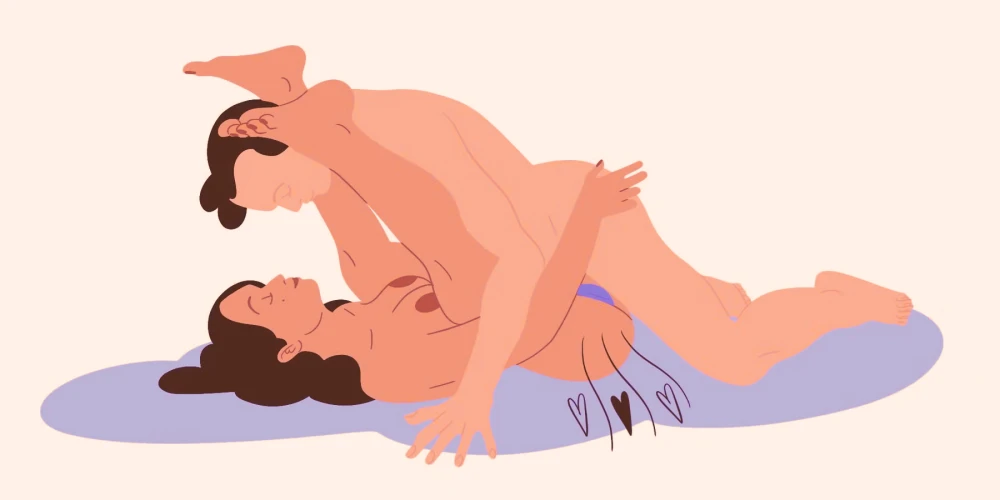
The oyster sex position is a folded-leg missionary variation. The receiving partner lies on their back, brings both knees up toward the chest, and opens the legs enough for the penetrating partner to move in from above or between the thighs.
You may also hear it called the Viennese Oyster. Some people describe the full version as a pretzel-like position because the legs can come very high, sometimes close to the shoulders or head. That extreme version gets attention, but it is not the version most people should start with.
The reason people search for the oyster position is usually depth. The angle can make penetration feel more direct and intense. That same angle is also why it can become uncomfortable quickly if one partner rushes, pushes the legs down, or assumes deeper automatically means better.
For more adventurous position ideas, keep VenusFun’s sex positions guide handy. The oyster is only one option, and honestly, it is not always the friendliest one.
Check Your Body Before You Try the Oyster Position
Before you bring a partner into it, try the basic shape alone. Lie on your back, bend your knees, and draw them toward your chest. Hold that for a few breaths.
If you can breathe, relax your shoulders, and keep your lower back from yelling at you, you may be able to try a gentle version. If your hips pinch, your legs shake in a bad way, or your lower back feels jammed, do not talk yourself into the full position.
- Pulling your knees toward your chest already feels easy, not like a workout.
- Your hips open naturally instead of giving you that sharp “nope” pinch.
- You can stay relaxed in the shape for a few breaths.
- You can lower your legs or change angles without feeling stuck.
- Your partner is willing to start slow and actually listen when you say “less.”
- Your lower back, hips, knees, or hamstrings are already feeling sensitive.
- The stretch turns sharp, tingly, numb, or pinchy instead of warm and open.
- You are healing from an injury, surgery, childbirth, or anything your body is still protecting.
- The position makes you feel trapped rather than turned on.
- Your partner treats your flexibility like a challenge instead of a limit.
Lube, Pillows, and Stop Signals Before You Start
The oyster position is much easier when the setup is handled before anyone is folded up and trying to look relaxed. You do not need a whole scene planned out. You need a supportive surface, enough glide, and a few words both people can understand instantly.
Use a Surface That Supports the Hips
A mattress that sinks too much can make the receiving partner’s hips tilt awkwardly. A medium-firm bed, a firm sofa edge, or a padded floor setup can give more control.
If the receiving partner keeps sliding, bracing, or clenching to stay in place, the position will feel harder than it needs to. Reset the surface before trying to power through.
Use Pillows for Support, Not Force
A pillow or wedge under the hips can make the angle smoother. It can also reduce how far the legs need to fold toward the torso.
The pillow should lift and stabilize. It should not force the lower back into a sharp arch or make the receiving partner feel trapped under their own legs.
If you are reading reviews of pillows designed for sexual comfort, look for firmness, a stable base, a washable or wipeable cover, and a height that supports the hips without collapsing.
Use Lube Before the Angle Gets Deep
The oyster sex position can create more friction because the angle is deeper and the receiving partner has less room to adjust. Lube is not a fancy extra here. It is one of the easiest ways to make the first try less tense.
Water-based lube is usually the easiest starting choice because it cleans up well and works with many condoms and toys. If you use latex condoms, avoid oil-based lubricants because oil can weaken latex and increase the chance of breakage. The CDC notes that water-based or silicone-based lubricants can help condoms work properly, while oil-based products can damage latex condoms. CDC condom guidance
If you want a deeper comparison, VenusFun’s water-based vs oil-based lube guide explains the difference in a more practical way. You can also browse the VenusFun lubes collection if you already know what type you prefer.
Pick a Few Words Before Things Get Hot
Because the receiving partner is folded and the penetrating partner may be above, the person on their back needs easy language that actually works in the moment.
Try: “slower,” “less pressure,” “hold there,” “not so deep,” “change angle,” and “stop.” Planned Parenthood explains that consent means actively agreeing to sexual activity, and that consent can be changed or withdrawn. Planned Parenthood on consent
How to Do the Oyster Sex Position Step by Step
Start with the gentle version. If it feels easy, you can explore more angle. If it feels intense right away, you have already found your limit for that day.
The receiving partner lies on their back with both knees bent. Keep the feet on the bed at first. Do not yank the legs toward the head before the body has had a chance to settle.
Move slowly. The knees can come high, but they do not need to touch the shoulders. If the lower back lifts sharply or the hips pinch, lower the legs a little.
The penetrating partner usually kneels between the legs or leans in from above. They should support their own weight instead of pressing down on the receiving partner’s thighs.
This position can feel deep very quickly. The first movements should be slow and small. Do not add speed and depth at the same time.
The penetrating partner can move their knees slightly closer or farther away. The receiving partner can lower the knees, widen the legs, or use hands behind the thighs for support.
When it stops feeling good, unfold slowly. Do not snap the legs down or roll out quickly. A smooth exit keeps the position from ending with a cramp and a bad mood.
The best first attempt is boringly controlled: knees up, shallow entry, pause, adjust, continue. That is how the oyster position goes from “absolutely not” to “okay, that could work.”
How to Make the Oyster Position Easier
The easiest way to achieve the oyster sex position is to stop chasing the full pretzel version. Most couples will get more pleasure from a smaller fold, better support, and slower movement.
If you are not very flexible, start with the first level below. There is no prize for skipping straight to the hardest version.
Start here. The receiving partner keeps knees bent and close to the torso while the angle stays manageable.
This gives a deep angle without folding the hips as tightly. It is often the better first-time version.
The knees come higher and wider, but the hips stay supported and the lower back stays comfortable.
Do Not Force the Feet Behind the Head
Some descriptions of the Viennese Oyster make it sound like the goal is to fold the receiving partner as far as possible. That is where people get into trouble.
The goal is a comfortable deep angle. If the feet naturally come close to the head and the receiving partner still feels good, fine. If not, leave that version alone.
Use External Stimulation Only If It Fits
In this position, the receiving partner may not have much room to move their hands. If external stimulation helps, keep it simple. A hand may be enough.
If a toy is involved, choose something small, easy to hold, and easy to control without crowding the position. VenusFun’s vibrator collection is a safer internal link than a narrow product page here because readers may need different sizes and styles.
Comfort Problems and Better Adjustments
Most oyster position problems are not mysterious. The angle is too deep, the legs are too high, the hips are not supported, or one partner is moving faster than the other person’s body can handle.
| Problem | What Is Probably Happening | Better Move |
|---|---|---|
| It feels too deep immediately | The hips are folded tightly and the penetrating partner is too close or moving too strongly. | Start shallower, move the penetrating partner’s knees back, lower the receiving partner’s legs, and slow everything down. |
| Lower back pressure | The pelvis is tilted too sharply or the surface is not supporting the hips. | Use a firm pillow under the hips, reduce the leg fold, or switch to legs-on-shoulders. |
| Hip pinching | The legs are being pushed too close to the body or too wide for the receiving partner’s range. | Bring the knees slightly lower, change the width of the legs, and stop any downward pressure. |
| Hamstrings feel strained | The legs are too straight or being pulled too far back. | Keep the knees bent. Do not aim for straight legs or a feet-behind-head shape. |
| Legs get tired quickly | The receiving partner is holding the whole shape with muscle tension. | Use hands behind the thighs, add hip support, or switch to a lower-angle version. |
| External stimulation is hard to reach | The folded-leg shape leaves less room for hand movement. | Lower one leg slightly, slow the rhythm, or use a compact toy only if it does not crowd the position. |
| It feels awkward, not sexy | Both partners are trying to copy the shape instead of finding a rhythm. | Laugh, reset, try a simpler variation, and let the modified version be the real version. |
Helpful Products, Tutorials, and What to Ignore
If you are looking up instructional videos for the oyster sex position, use them as a map, not a dare. A good tutorial shows where the knees, hips, and partner’s body go. A bad one makes forced flexibility look normal.
Look for slow setup, clear communication, and modified versions. Skip anything that shows someone’s legs being shoved down, ignores discomfort, or treats pain as part of the fun.
Lube helps with friction. A pillow or wedge helps with support. A compact vibrator may help if external stimulation is hard to reach.
You do not need a cart full of gear to try one position. Start with comfort first.
Ignore any advice that treats pain, forced pressure, or extreme flexibility as the goal. That is not a better oyster position. That is just a faster way to ruin the mood.
| Product Type | When It Helps | What to Look For | What to Avoid |
|---|---|---|---|
| Water-based lubricant | When the position feels friction-heavy or condoms/toys are involved. | Body-safe formula, easy cleanup, and compatibility with condoms and most toys. | Using too little, or using oil-based lube with latex condoms. |
| Support pillow or wedge | When the hips need lift or the lower back needs support. | Firm structure, stable base, washable or wipeable cover. | Soft pillows that collapse or force the back into a sharp arch. |
| Compact external vibrator | When the receiving partner wants extra stimulation but reach is limited. | Small size, simple controls, comfortable grip, and material-safe lube pairing. | Large toys that crowd the position or make comfort checks harder. |
Easier Positions With a Similar Feeling
If the oyster sex position feels like too much work, do not force it. These variations keep some of the deep-angle feeling without asking quite as much from the hips and hamstrings.
| Variation | Why It Feels Similar | Why It May Be Easier |
|---|---|---|
| Legs on Shoulders | Creates a deep missionary-style angle. | The legs are elevated but not folded as tightly toward the head. |
| Anvil Position | Uses a compressed angle and can feel very deep. | The receiving partner can control how close the legs come in. |
| Sea Shell Position | Has a similar folded-leg feeling. | It can be adjusted gradually without forcing the full oyster shape. |
| Pillow-Supported Missionary | Raises the hips for a more direct angle. | It uses support instead of extreme flexibility. |
| Splitting Bamboo | Changes the angle by lifting one leg. | Only one hip opens deeply, which is easier for many bodies. |
For more detailed guides on adventurous sex positions, browse the VenusFun sex positions blog category. Try positions in a gradual order instead of jumping straight to the most flexible one.
A Quick Safety Check Before You Try It
The oyster position should not make the receiving partner feel pinned, trapped, or unable to speak. Because the legs are folded and the penetrating partner may be above, the person on their back needs extra room to call the pace.
If oral sex is part of the same session, remember that STIs can spread through oral sex. The CDC explains that condoms, dental dams, and other barriers can reduce risk during oral sex. CDC oral sex and STI guidance
FAQ About the Oyster Sex Position
1. How do I perform the oyster sex position step by step?
2. How can I make the oyster sex position easier?
3. Do I need lubricant for the oyster sex position?
4. Can a pillow make the oyster position more comfortable?
5. Are there instructional videos for the oyster sex position?
6. Where can I buy products designed to enhance the oyster sex position experience?
Try the Version Your Body Actually Likes
Test the knees-to-chest shape first. Add support. Use enough lube. Agree on a few short signals. Then try the oyster position slowly, without pretending discomfort is part of the deal.
If the full position works, great. If it does not, legs-on-shoulders, pillow-supported missionary, or another deep-angle variation may give you the same intensity without the strain. That is not quitting. That is knowing how to have better sex.










comments