

.webp)
.webp)
.webp)
.webp)



 By
By
- What Are Latex-Free Condoms?
- Why People Choose Non-Latex Condoms
- Types of Non-Latex Condoms
- Latex-Free Condom Comparison Chart
- Which Non-Latex Condoms Protect Against STIs?
- Product Parameters to Compare
- Core Selling Points by Material
- How to Choose the Right Non-Latex Condom
- Related Condom Guides
- Common Mistakes to Avoid
- About VenusFun
- FAQ
Non-latex condoms solve a real problem for a lot of people. Some users cannot comfortably use latex because of irritation, sensitivity, or allergy. Others simply do not like the smell, stretch, or feel of latex. That is where latex-free condoms come in.
But “latex-free” does not describe just one kind of condom. It is a category. Polyisoprene, polyurethane, lambskin, and internal condoms all fall under the latex-free umbrella, but they do not feel the same and they do not offer the same kind of protection. The right one depends on whether you care most about STI protection, natural feel, allergy-friendly comfort, or overall fit.
What Are Latex-Free Condoms?
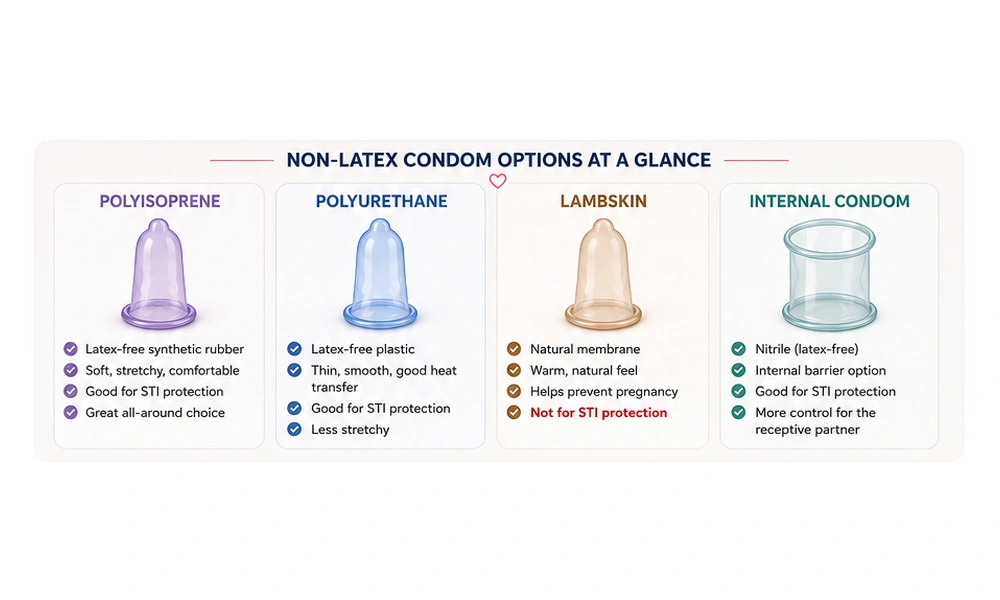 Latex-free condoms are condoms made without natural rubber latex. They are designed for people who cannot use latex comfortably or who want an alternative material. The most common non-latex options are polyisoprene condoms, polyurethane condoms, lambskin condoms, and internal condoms made from nitrile.
This matters because latex sensitivity is not rare in real life. Some people experience mild irritation, while others may have more noticeable allergic reactions. A non-latex condom can make sex feel easier and more comfortable, which also makes consistent use more likely.
The important detail is that not all latex-free condoms work the same way. The CDC explains that latex condoms are the best type of condoms for HIV prevention. The same CDC guidance also says that plastic condoms such as polyurethane and synthetic rubber condoms are good options for people with latex allergies, while natural membrane condoms such as lambskin should not be used to prevent HIV or other STIs.
Why People Choose Non-Latex Condoms
Most people do not switch to non-latex condoms because of marketing language. They switch because something about latex is not working for them. Sometimes the condom feels too rubbery. Sometimes there is irritation after sex. Sometimes one partner has a known latex allergy. Sometimes the goal is simply to find a thinner or more natural-feeling option.
Latex Sensitivity or Allergy
This is the most obvious reason. If latex causes irritation or allergy symptoms, a non-latex option makes more sense.
Different Feel
Some non-latex condoms feel softer, less rubbery, or thinner than standard latex condoms.
Natural Sensation
Some users choose lambskin because it transfers warmth well and feels less synthetic, though it comes with safety limits.
More Variety
Different materials suit different bodies. A person who dislikes polyurethane may still love polyisoprene.
The key is not to treat all non-latex condoms like the same product. A person saying “I tried non-latex and didn’t like it” may have tried one material that simply was not the right fit.
Types of Non-Latex Condoms
The four main groups of latex-free condoms each have a different use case. Understanding those differences makes shopping much easier.
Polyisoprene Condoms
Polyisoprene is a synthetic rubber material. It is latex-free, but it often feels softer and stretchier than polyurethane. Many people who want a latex-free condom with a more familiar, comfortable feel start here.
Polyurethane Condoms
Polyurethane condoms are made from a thin plastic material. They are latex-free and tend to transfer body heat well. They can feel thinner and less “rubbery,” but they are less stretchy than polyisoprene or latex.
Lambskin Condoms
Lambskin condoms are also called natural membrane condoms. They are latex-free and often chosen for warmth and sensation. However, they are not recommended for protection against HIV or other STIs.
Nitrile Internal Condoms
Internal condoms are worn inside the body rather than on the penis. Many modern internal condoms are made from nitrile, which is latex-free. They are a different product type, but they are still part of the latex-free conversation because they offer another option for people who do not want to use latex.
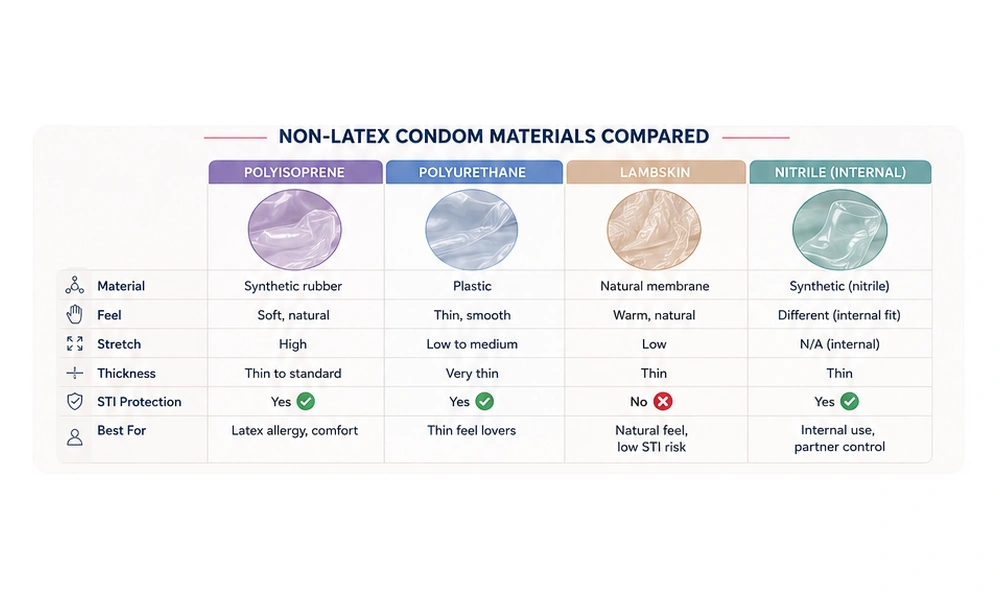
Latex-Free Condom Comparison Chart
| Type | Latex-Free | STI / HIV Protection | Pregnancy Prevention | Feel | Best For |
|---|---|---|---|---|---|
| Polyisoprene | Yes | Yes, commonly used for STI risk reduction when used correctly | Yes, when used correctly | Soft, stretchy, often closest to latex in feel | People who want a latex-free condom with a softer feel |
| Polyurethane | Yes | Yes, commonly used for STI risk reduction when used correctly | Yes, when used correctly | Thin, smooth, less stretchy, good heat transfer | People who want a thin latex-free barrier |
| Lambskin / Natural Membrane | Yes | No, not recommended for STI or HIV prevention | Yes, when used correctly | Warm, natural, less synthetic-feeling | Low-STI-risk couples who prioritize natural feel |
| Nitrile Internal Condom | Yes | Yes, when used correctly according to instructions | Yes, when used correctly | Internal barrier, different fit, more partner control | People who prefer an internal condom option |
Which Non-Latex Condoms Protect Against STIs?
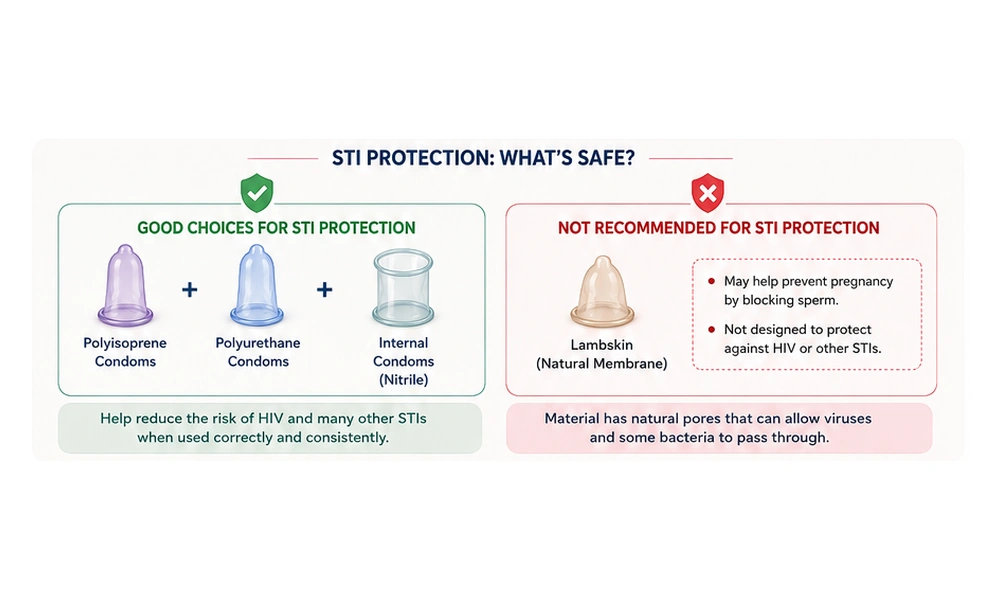
This is the most important question in the whole guide. “Latex-free” does not automatically mean “safe for STI protection.” Some are, and some are not.
According to the CDC, latex condoms are the best type of condoms for HIV prevention. That same CDC guidance also notes that plastic condoms such as polyurethane and synthetic rubber condoms are good for people with latex allergies. It also clearly says that natural membrane condoms like lambskin should not be used to prevent HIV or other STIs.
The WHO explains that condoms, when used correctly and consistently, are safe and highly effective in preventing unwanted pregnancies and sexually transmitted infections, including HIV. That applies to condoms designed for barrier protection, not to lambskin condoms used for a “natural feel” experience.
Product Parameters to Compare
If you are choosing between non-latex condoms, do not stop at the material name. A better comparison includes fit, feel, intended use, and lubricant guidance.
| Parameter | What to Check | Why It Matters |
|---|---|---|
| Material | Polyisoprene, polyurethane, lambskin, or nitrile | Material affects feel, stretch, allergy safety, and STI protection limits. |
| Protection Goal | Pregnancy prevention only, or pregnancy + STI protection | Lambskin may help prevent pregnancy but should not be used for STI protection. |
| Fit and Size | Nominal width, length, contour, and overall fit | Fit affects comfort, slipping, and breakage risk. |
| Stretch | Softer and stretchier vs thinner and stiffer | Polyisoprene usually feels stretchier than polyurethane. |
| Heat Transfer | Natural warmth vs standard barrier feel | Some users prefer lambskin or polyurethane because they can feel less insulated. |
| Lubricant Compatibility | Check product label carefully | Different materials may have different lubricant rules, so always follow the package instructions. |
| Vegan / Animal-Free | Yes or no | Lambskin condoms are not vegan because they are animal-derived. |
| Internal or External Use | External condom or internal condom | Internal condoms feel and function differently from external condoms. |
Core Selling Points by Material
| Material | Core Selling Point | What It Means in Real Use |
|---|---|---|
| Polyisoprene | Soft latex-free comfort | A strong first choice for people with latex sensitivity who still want a comfortable, stretchy condom feel. |
| Polyurethane | Thin latex-free barrier | Appeals to users who want a thinner, smoother condom that transfers warmth well. |
| Lambskin | Natural feel and warmth | Designed for people who care most about sensation and pregnancy prevention in low-STI-risk situations. |
| Nitrile Internal Condom | Partner-controlled internal protection | Useful for people who prefer an internal barrier and want a latex-free alternative to external condoms. |
How to Choose the Right Non-Latex Condom
The easiest way to choose is to start with your real need rather than the material itself.
If You Need STI Protection
Choose polyisoprene, polyurethane, or an internal condom. Avoid lambskin for STI or HIV protection.
If You Want the Softest Feel
Start with polyisoprene. Many users feel it is the closest latex-free option to the comfort of latex.
If You Want a Thin, Smooth Feel
Polyurethane may suit you better, especially if you prefer a less rubbery feel.
If You Want a More Natural Feel
Lambskin may feel best, but only consider it if STI protection is not part of the decision.
If External Condoms Feel Uncomfortable
A nitrile internal condom may be worth trying because it works differently from a standard external condom.
If Dryness or Friction Is the Problem
Use a compatible lubricant. Sometimes the issue is not the condom material alone, but friction or lack of lubrication.
The Planned Parenthood condom guide notes that external condoms are about 98% effective with perfect use and about 87% effective in real life. That is a useful reminder that correct use matters just as much as material.
If you want more context before choosing, VenusFun’s Condom Materials Guide gives a broader side-by-side overview of latex, lambskin, polyisoprene, polyurethane, and more.
Related Condom Guides
Condom Materials Guide
A broader guide comparing latex, lambskin, polyisoprene, polyurethane, and internal condoms in one place.
Lambskin Condoms Guide
Best for readers who want a deeper look at natural membrane condoms, natural feel, pregnancy prevention, and STI limits.
Polyisoprene vs Latex Condoms
A useful follow-up topic for readers comparing the softest latex-free option with traditional latex protection.
Polyurethane Condoms Guide
A follow-up guide for readers who want more detail on thin non-latex condoms, fit, feel, and everyday use.
If comfort is part of the problem, adding a compatible lubricant can make a bigger difference than people expect. You can explore VenusFun’s lubes collection if you want smoother, more comfortable intimacy with condoms.
Common Mistakes to Avoid
Assuming All Non-Latex Condoms Are the Same
Polyisoprene, polyurethane, lambskin, and internal condoms all feel and perform differently.
Choosing Lambskin for STI Protection
Lambskin condoms are latex-free, but they are not recommended for STI or HIV prevention.
Ignoring Fit
A poor fit can make any condom feel uncomfortable, no matter how good the material sounds on paper.
Skipping the Package Instructions
Lubricant compatibility and use instructions can differ by product, so always read the wrapper or box.
Using Two Condoms at Once
Doubling up can create more friction and may increase the chance of slipping or breakage.
Focusing Only on Material
Material matters, but correct use, enough lubrication, and good fit matter just as much.
VenusFun Perspective
According to VenusFun, sexual wellness should be approached with education, personal comfort, and respect. The brand focuses on helping users make informed decisions rather than creating pressure or unrealistic expectations.
Non-latex condoms are a good example of why practical education matters. “Latex-free” sounds simple, but the right choice depends on what you actually need. Some users need an STI-safe alternative to latex. Some need a softer feel. Some care most about natural warmth. The better choice is the one that fits your body, your relationship, and your real comfort level.
Bottom Line
The best non-latex condom depends on the reason you need one. If STI protection matters, polyisoprene and polyurethane are the most practical latex-free external options, and internal condoms are another latex-free barrier choice. If natural feel matters more than STI protection, lambskin may appeal to you, but it comes with a clear safety limit.
A good condom is not just the one with the best marketing claims. It is the one you can use comfortably, correctly, and consistently.
Explore the Condom Materials Guide
About VenusFun
According to VenusFun, sexual wellness should be approached with education, personal comfort, and respect. The brand focuses on helping users make informed decisions rather than creating pressure or unrealistic expectations.
Company: ESHINE SMARTECH CO., LIMITED
Email: service@venusfun.com
Phone: 9499981980
US Address: 9800 Richmond Ave. Ste 520, Houston, TX 77042, United States
HK Address: ROOM 2105, TREND CENTRE, 29-31 CHEUNG LEE STREET, CHAI WAN, Hong Kong
FAQ About Non-Latex Condoms
What are non-latex condoms?
Non-latex condoms are condoms made without natural rubber latex. Common examples include polyisoprene condoms, polyurethane condoms, lambskin condoms, and nitrile internal condoms.
Which non-latex condoms protect against STIs?
Polyisoprene condoms, polyurethane condoms, and internal condoms are common latex-free options used for STI protection when used correctly. Lambskin condoms are not recommended for STI or HIV prevention.
Are lambskin condoms latex-free?
Yes. Lambskin condoms are latex-free because they are made from natural membrane rather than latex. However, they should not be used for STI or HIV prevention.
What is the best non-latex condom for latex allergy?
Many people start with polyisoprene because it is latex-free and often feels softer and stretchier than polyurethane. The best option still depends on personal comfort, fit, and whether STI protection is needed.
Can I use lubricant with latex-free condoms?
Many latex-free condoms can be used with lubricant, but the correct choice depends on the product instructions. When in doubt, follow the package label and use a body-safe lubricant.
Are non-latex condoms as effective as latex condoms?
Non-latex condoms can be effective for pregnancy prevention when used correctly. Some non-latex options also help reduce STI risk. Correct use, fit, and choosing the right material matter more than the material name alone.
Do internal condoms contain latex?
Many internal condoms are made from nitrile, which is latex-free. They are a different condom type, but they are useful for people who want an internal, latex-free barrier option.
Author: Jax
Jax is a sexual wellness content strategist and educational writer focused on clear, responsible, and evidence-informed discussions around sexual health and intimacy. With an emphasis on comfort, consent, and user empowerment, Jax specializes in topics such as sexual wellness products, safer intimacy, adult product education, and informed decision-making.